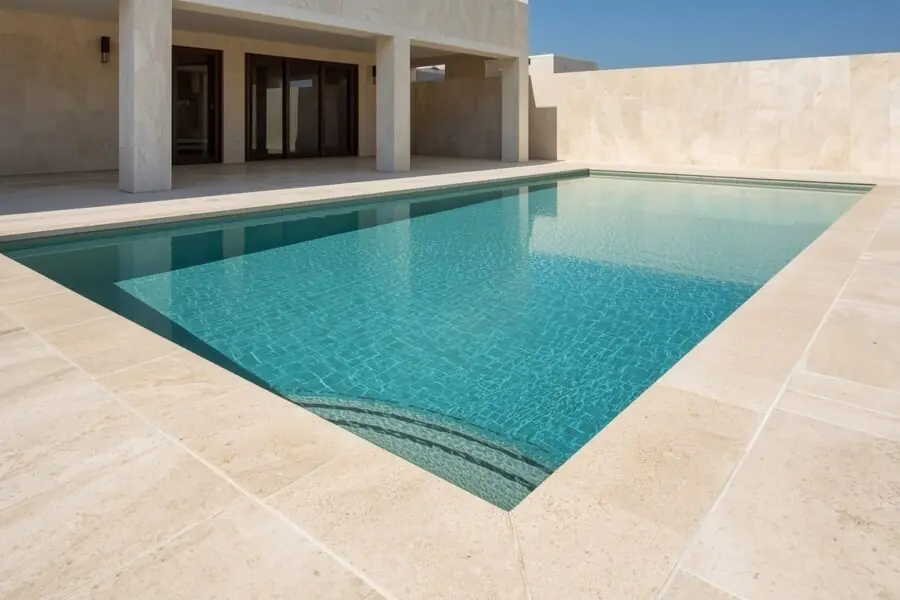
Pool coping is one of the most demanding exterior stone applications in hot-climate regions such as Texas, Florida, Arizona, and the Southern U.S.
It must handle constant heat, UV exposure, water contact, and daily foot traffic – all while remaining safe, durable, and visually consistent over time.
Choosing the right natural stone for pool coping is not only a design decision. It is a performance decision that directly affects long-term maintenance, user comfort, and project durability.
This article outlines which natural stone materials perform best in hot climates and why they are preferred by architects, contractors, and fabricators working on pool projects.
Looking for reliable stone supply?
We organize direct quarry sourcing from Turkey with container-based delivery across the U.S. Structured for fabricators, contractors and project-based supply.
What Makes Pool Coping Challenging in Hot Climates
Hot and humid regions create a unique combination of stresses for natural stone:
- High surface temperatures under direct sun
- Thermal expansion and contraction
- Continuous exposure to chlorinated or saltwater
- Increased risk of slipping when wet
- Faster weathering of unsuitable finishes
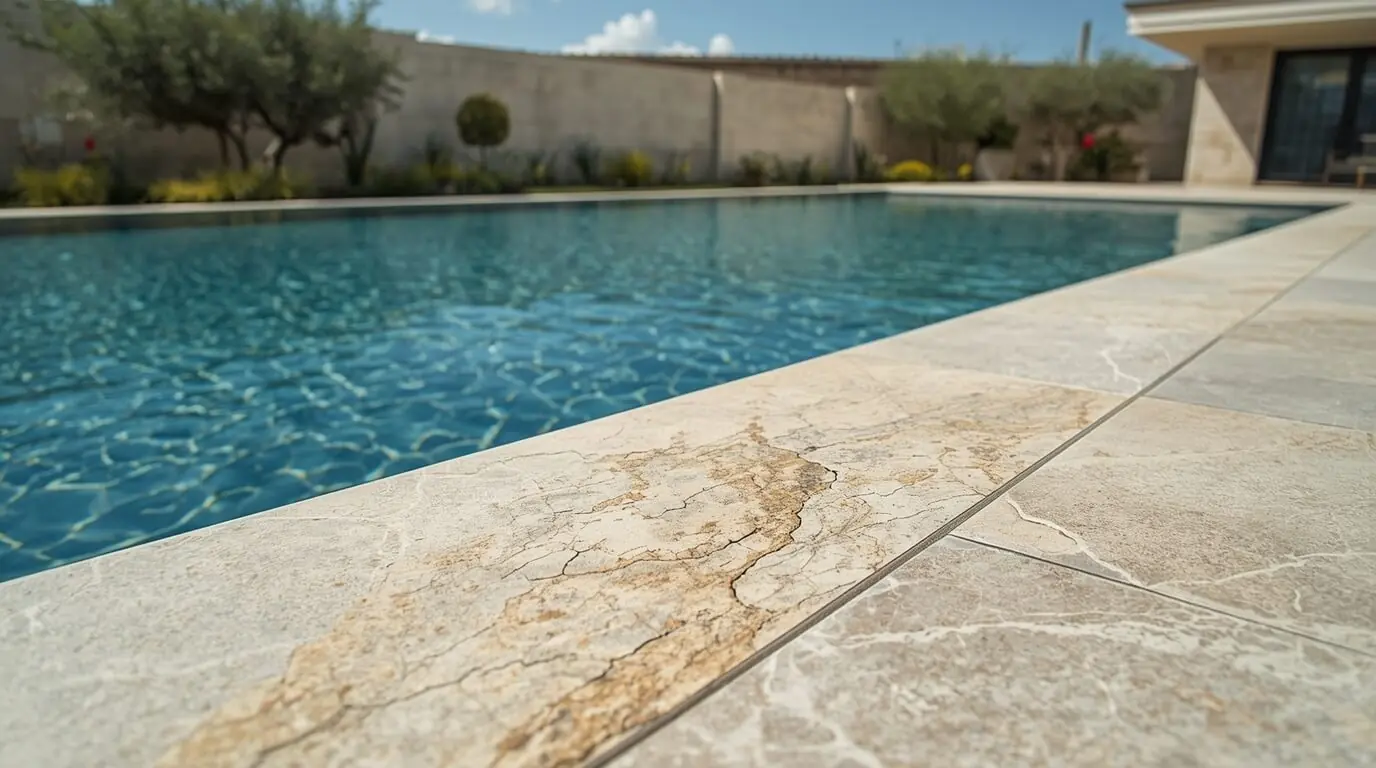
Materials that perform well indoors or in mild climates often fail prematurely when used around pools in hot regions.
Key Performance Requirements for Pool Coping Stone
From a supplier and project perspective, successful pool coping materials should meet several criteria:
- Heat resistance – stays cooler under direct sunlight
- Slip resistance – safe when wet
- Low water absorption – minimizes staining and degradation
- Structural stability – resists cracking and warping
- Finish consistency – predictable results across batches
Not all natural stones meet these requirements equally.
Travertine – The Most Proven Pool Coping Stone
Travertine is one of the most widely used natural stones for pool coping in hot climates.
Why Travertine Performs Well
- Naturally porous structure keeps surface temperatures lower
- Excellent slip resistance, especially in honed or tumbled finishes
- Performs well in freeze-thaw cycles and extreme heat
- Soft, natural color palette that complements outdoor environments
Turkish travertine, in particular, is favored for large-scale pool projects due to its consistency, availability in volume, and predictable fabrication behavior.
Recommended Finishes
- Honed
- Tumbled
- Lightly brushed
Highly polished travertine is not recommended for pool coping due to slip risk and glare.
Limestone – Clean Aesthetics with Proper Selection
Limestone is often selected for high-end residential and hospitality pool projects where a refined, architectural look is required.
Strengths
- Smooth, uniform appearance
- Comfortable underfoot
- Works well in light, neutral color schemes
Considerations
- Must be carefully selected for density and absorption
- Requires proper sealing
- Best suited for moderate-to-high-end projects with maintenance planning
Dense limestones from established quarries perform significantly better than softer, decorative varieties.
Marble – Limited but Strategic Use
Marble is sometimes used for pool coping, but only under specific conditions.
When Marble Can Work
- Shaded pool areas
- Decorative coping elements
- Low-traffic residential pools
Risks in Hot Climates
- Higher surface temperatures
- Increased sensitivity to chemicals
- Etching and surface wear over time
Marble is better suited for visual accents rather than high-traffic coping in full sun exposure.
Quartzite – Durability with Careful Finish Selection
Quartzite offers exceptional strength and durability, making it attractive for exterior use.
Advantages
- Very hard and dense
- Low water absorption
- Excellent resistance to wear
Challenges
- Can become extremely hot under direct sun
- Polished finishes are unsafe for pool areas
- Requires textured or leathered finishes for slip resistance
Quartzite is often used selectively for modern pool designs where durability is prioritized over surface temperature comfort.
Fabrication and Installation Considerations
Material choice alone is not enough. Proper fabrication and installation are critical to performance:
- Coping profiles should allow water runoff
- Consistent slab thickness ensures clean alignment
- Edge treatments must balance comfort and durability
- Batch consistency reduces color variation around the pool perimeter
Reliable slab supply and consistent grading are especially important for pool projects, where visual continuity is immediately noticeable.
Why Material Selection Matters for Long-Term Performance
Pool coping failures often result from material mismatch rather than installation errors.
In hot climates, choosing the wrong stone can lead to:
- Excessive heat retention
- Premature surface degradation
- Safety issues
- Higher long-term maintenance costs
Experienced suppliers focus not only on aesthetics, but on how materials perform years after installation.
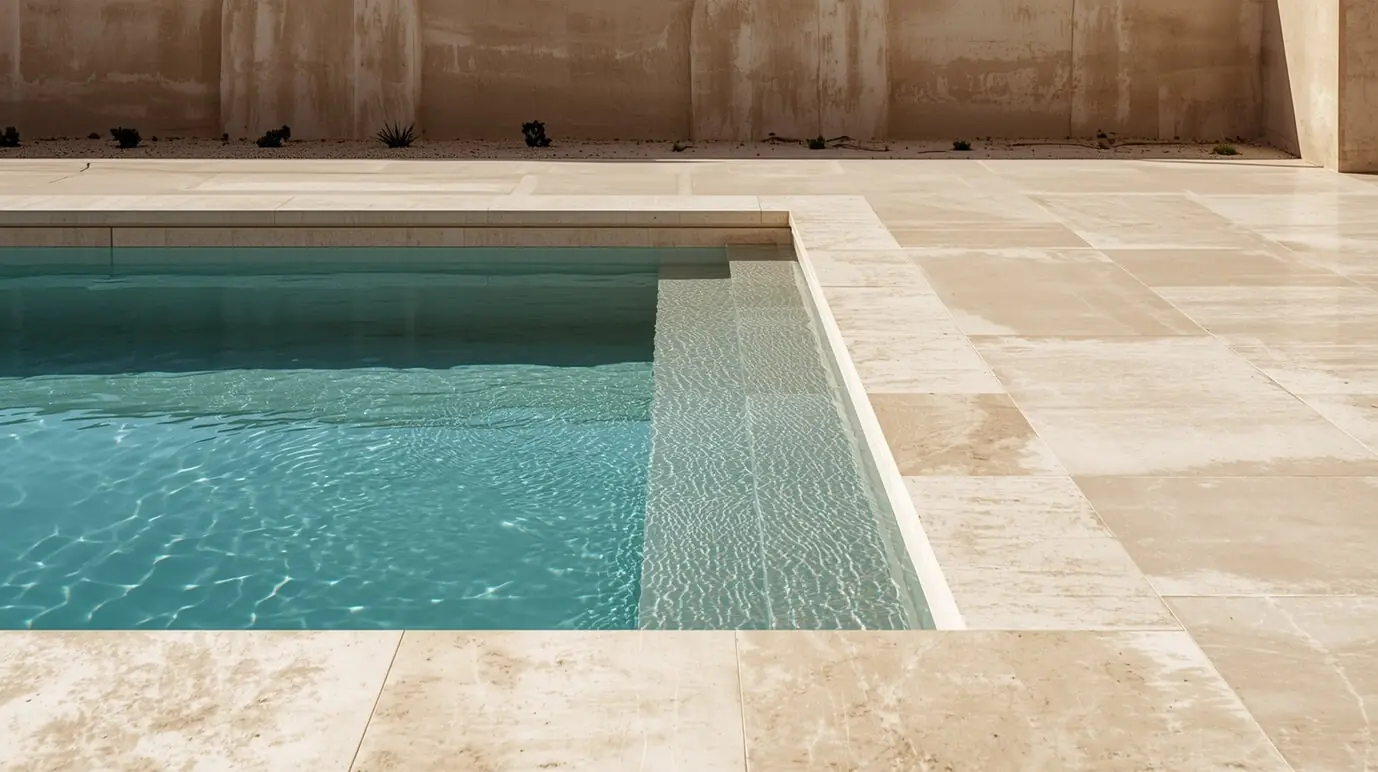
For pool coping in hot climates, travertine remains the most balanced and reliable natural stone option, followed by carefully selected limestone and textured quartzite.
Each project has unique requirements, but successful outcomes always start with materials chosen for performance, not just appearance.
Understanding how natural stone behaves under heat, water, and daily use allows architects, fabricators, and project buyers to make informed, long-term decisions.