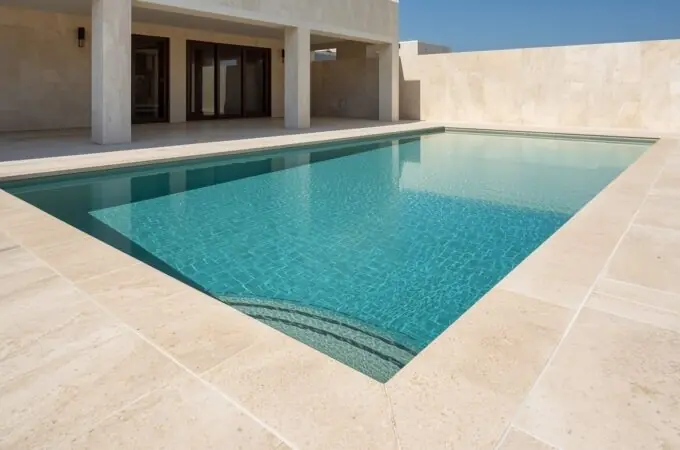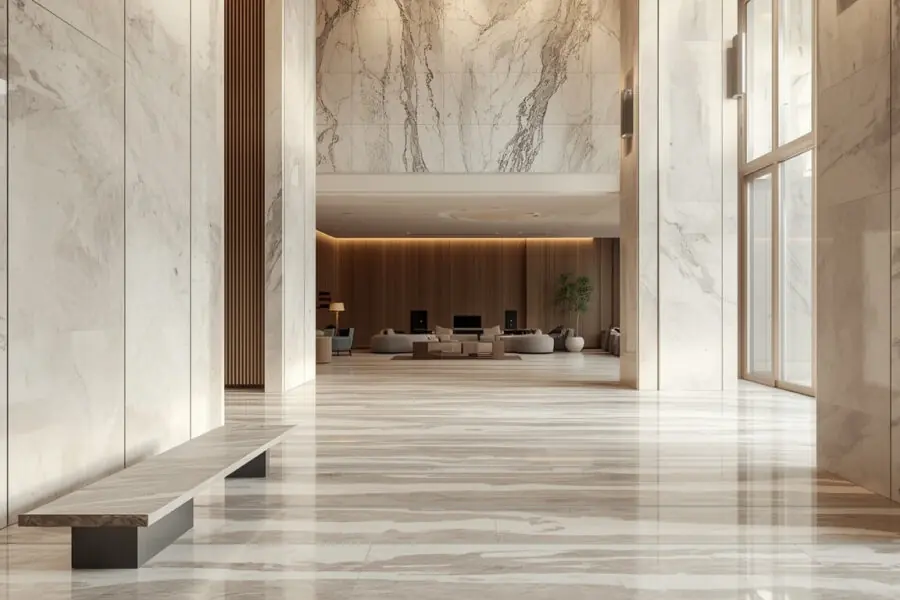
Marble continues to play a defining role in U.S. hospitality and multi-family developments. From luxury hotel lobbies to high-rise residential amenity spaces, marble slabs provide visual depth, material prestige, and long-term durability when properly specified.
For developers, architects, and general contractors, the key considerations extend beyond aesthetics. Large-scale projects require structured sourcing, consistent block selection, reliable lead times, and container-level coordination.
Why Marble Remains Relevant in Hospitality Design
Hospitality environments demand materials that communicate quality while withstanding continuous traffic. Marble offers:
- Timeless visual character
- Natural veining unique to each slab
- Compatibility with large-format installations
- Strong performance in climate-controlled interiors
- Design flexibility across contemporary and classic concepts
In hotel lobbies, reception areas, spa facilities, and elevator cores, marble functions not only as a finish but as an architectural statement.
Marble in Multi-Family Residential Projects
In high-end apartment and condominium developments, marble is increasingly used in:
- Lobby flooring and wall cladding
- Reception desks and feature walls
- Bathroom vanities
- Amenity areas and clubhouses
- Fireplace surrounds
Developers often seek materials that elevate perceived property value while maintaining budget control. Strategic slab selection and volume purchasing make this possible.
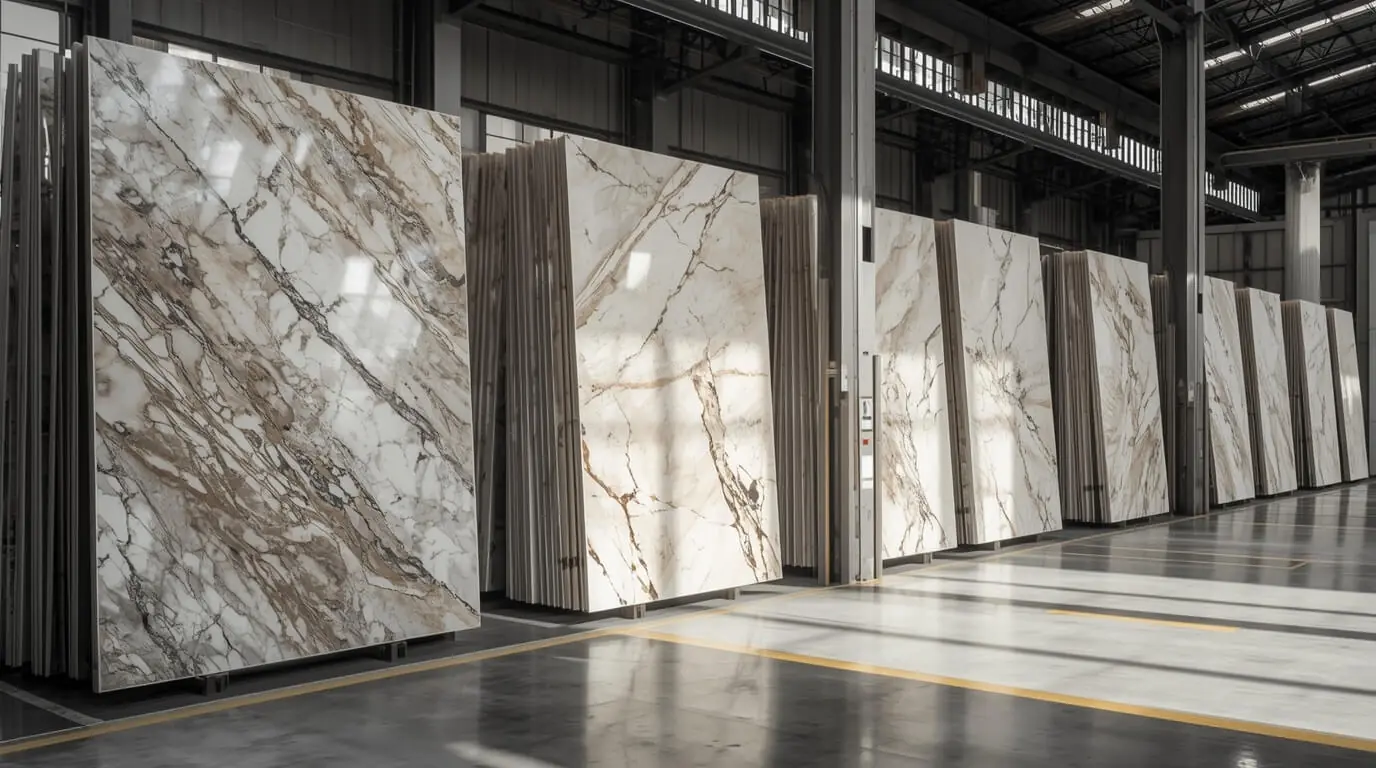
Specification Considerations for U.S. Projects
When specifying marble slabs for hospitality or multi-family use, project teams typically evaluate:
Slab Consistency and Block Matching
Large projects require multiple containers of visually consistent material. Quarry-level coordination helps maintain tonal continuity.
Thickness and Structural Suitability
Common slab thicknesses include 2 cm and 3 cm. Structural support and installation method must align with project requirements.
Finish Type
Polished, honed, and brushed finishes are selected based on traffic level and design intent.
Lead Times and Logistics
Project schedules must account for quarry production, container loading, ocean transit, and U.S. port clearance.
Access to Turkish Marble for U.S. Developments
Turkey remains one of the most reliable sources of architectural-grade marble for large-scale U.S. projects. With established quarry infrastructure and export capacity, Turkish marble supports both boutique hospitality projects and full multi-family developments.
Developers can review available selections through our marble slab inventory.
This model allows for:
- Direct quarry sourcing
- Container-level volume planning
- Project-aligned shipment scheduling
- Transparent logistics coordination
Container-Based Planning for Hospitality Projects
Hospitality developments often operate on strict opening timelines. Delays in stone delivery can affect downstream trades and finishing schedules.
Structured supply coordination helps:
- Align production with construction phases
- Secure block continuity for phased installations
- Reduce material substitution risk
- Maintain budget predictability
For projects requiring container-based coordination and structured supply planning, we provide dedicated marble slab supply programs.
Risk Management in Large-Scale Stone Procurement
Professional procurement teams typically address the following risks:
- Inconsistent slab color across shipments
- Shipping delays due to vessel scheduling
- Customs documentation errors
- Breakage due to inadequate packaging
Working directly with quarry-aligned suppliers reduces fragmentation in the supply chain and improves accountability.
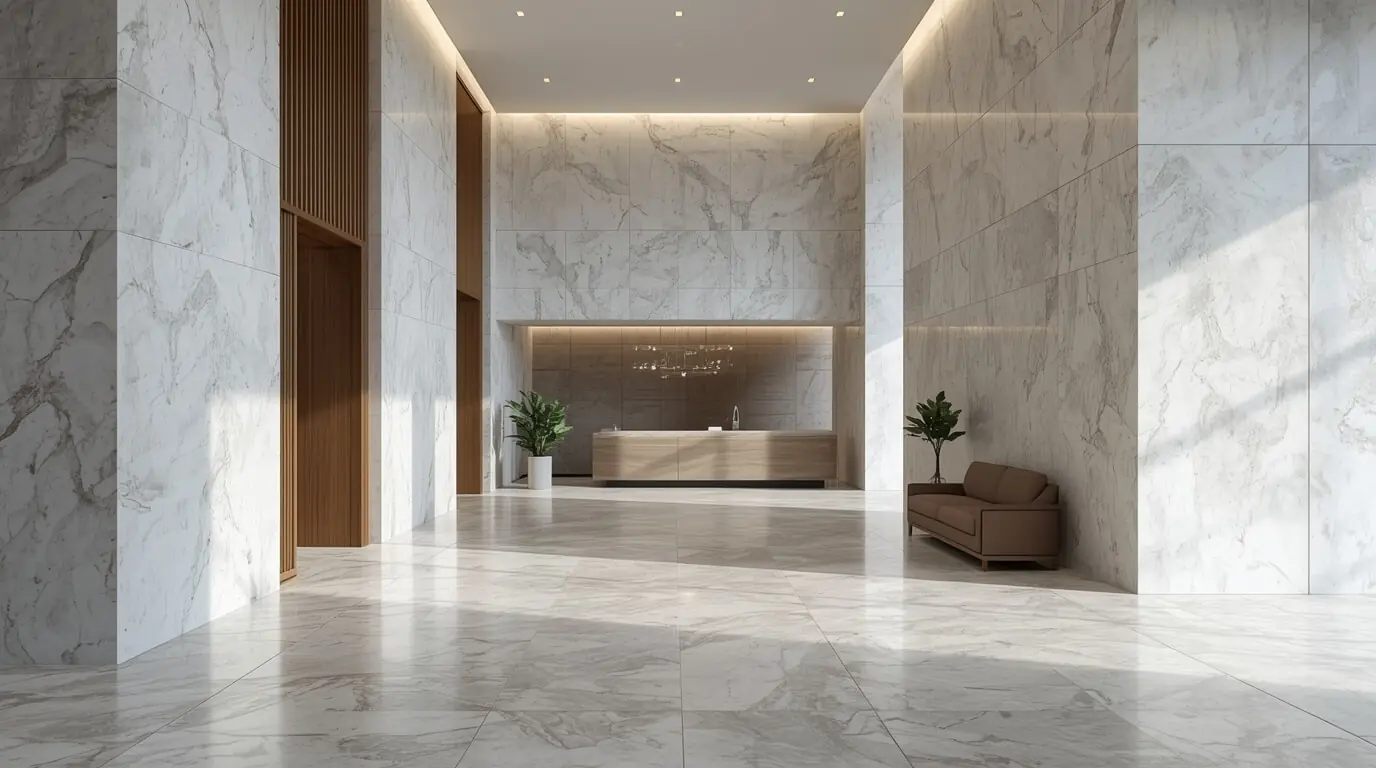
Marble slabs remain a cornerstone material for hospitality and multi-family construction across the United States. Beyond aesthetics, successful implementation depends on production coordination, logistics planning, and structured container supply.
With access to Turkish quarry networks and U.S.-aligned logistics, marble can be integrated into large-scale developments with predictable lead times and material continuity.
For developers, architects, and procurement teams planning upcoming hospitality or residential projects, structured sourcing is as important as design selection.