Natural stone remains one of the most established materials used in residential and commercial construction across the United States. Marble slabs are widely used for countertops, flooring, wall cladding, and architectural elements, creating steady demand from fabricators, contractors, and developers.
As a result, marble slab yards play a central role in the stone supply chain, acting as regional distribution hubs where fabricators and builders source slabs for projects.
Starting a marble slab yard requires more than simply purchasing inventory. The business depends on reliable international sourcing, heavy-material logistics, warehouse infrastructure, and strong relationships with fabricators.
This guide explains how marble slab yards operate and what is required to establish one in the U.S.
Understanding the Natural Stone Supply Chain
Natural stone typically passes through several stages before reaching a construction project.
A simplified supply chain looks like this:
- Quarries extract marble blocks from natural deposits.
- Processing factories cut blocks into slabs and apply surface finishes.
- Exporters and importers organize international shipping.
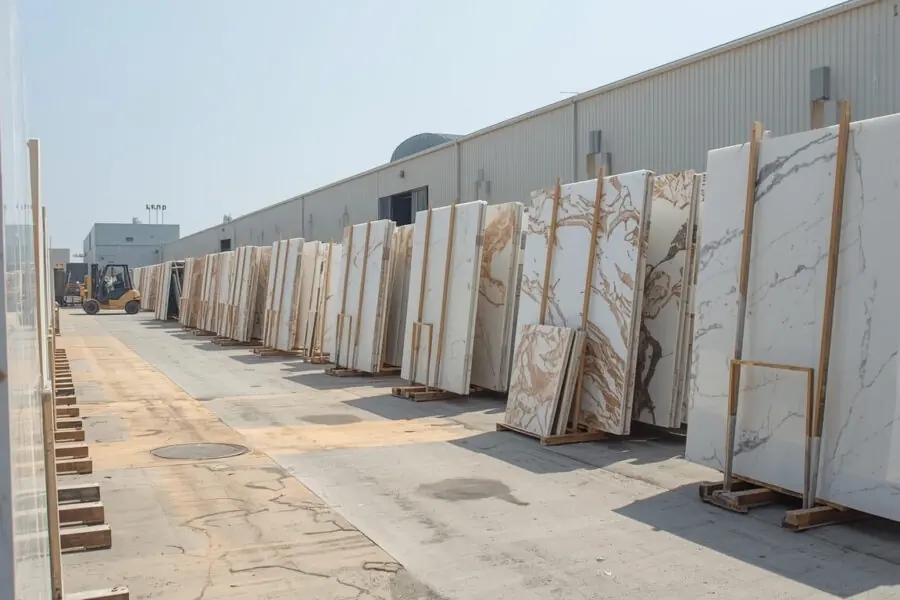
- Slab yards store and distribute slabs to the regional market.
- Fabricators cut slabs into countertops, wall panels, or custom pieces.
In most cases, U.S. slab yards rely on international suppliers, as many of the world’s largest marble deposits are located outside the United States.
Major exporting countries include:
- Turkey
- Italy
- Greece
- Spain
- India
- Brazil
Turkey, for example, is one of the largest marble exporters globally and supplies a wide range of marble varieties used in U.S. residential and commercial projects.
Choosing the Right Business Model
Before launching a marble slab yard, it is important to determine how the business will operate within the supply chain.
Several models exist.
Slab Distribution Yard
The most common model is a wholesale slab distributor that purchases bundles of marble slabs and sells them to fabricators.
These yards maintain physical inventory and provide viewing access for fabricators and designers.
Direct Importer
Some companies import marble slabs directly from overseas factories, allowing them to control supply and pricing.
This approach requires more logistical coordination but can significantly improve margins.
Import and Fabrication Hybrid
Larger businesses may combine slab distribution with a fabrication facility, allowing them to serve both contractors and homeowners.
However, fabrication requires expensive equipment and specialized labor, making it less common for new businesses.
For most startups, wholesale slab distribution to fabricators is the most realistic entry point.
Registering the Business
Operating a marble slab yard requires proper legal and tax registration.
Most stone distributors in the United States operate as Limited Liability Companies (LLC) due to liability protection and flexible taxation.
Basic registration typically includes:
- forming an LLC or corporation
- obtaining an Employer Identification Number (EIN) from the IRS
- registering for a state sales tax permit
- obtaining local business licenses
If the company plans to import slabs directly, it must also work with U.S. Customs and Border Protection (CBP) and obtain an importer number (usually the EIN).
Many importers also work with customs brokers and freight forwarders to handle documentation and shipping coordination.
Importing Marble Slabs into the United States
Most marble slabs arrive in the U.S. via ocean freight.
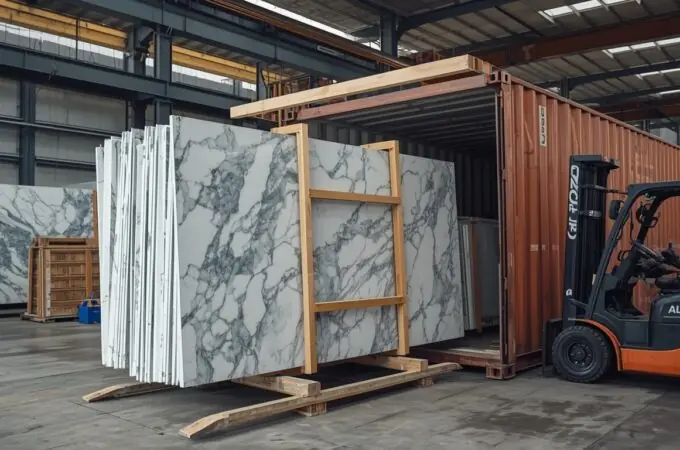
Heavy stone shipments typically travel in 20-foot shipping containers, which are better suited for dense cargo than 40-foot containers.
A single container usually carries:
- 6 to 8 bundles of slabs
- approximately 6,000 to 8,000 square feet of stone
- total cargo weight of 20–25 tons
Each bundle may contain around 6 to 8 slabs, depending on thickness and stone type.
Major U.S. ports handling natural stone imports include:
- Houston
- Miami
- Los Angeles / Long Beach
- New York / New Jersey
- Savannah
After clearing customs, containers are transported by truck to warehouses or slab yards.
Warehouse and Slab Yard Infrastructure
Handling marble slabs requires specialized infrastructure designed for extremely heavy materials.
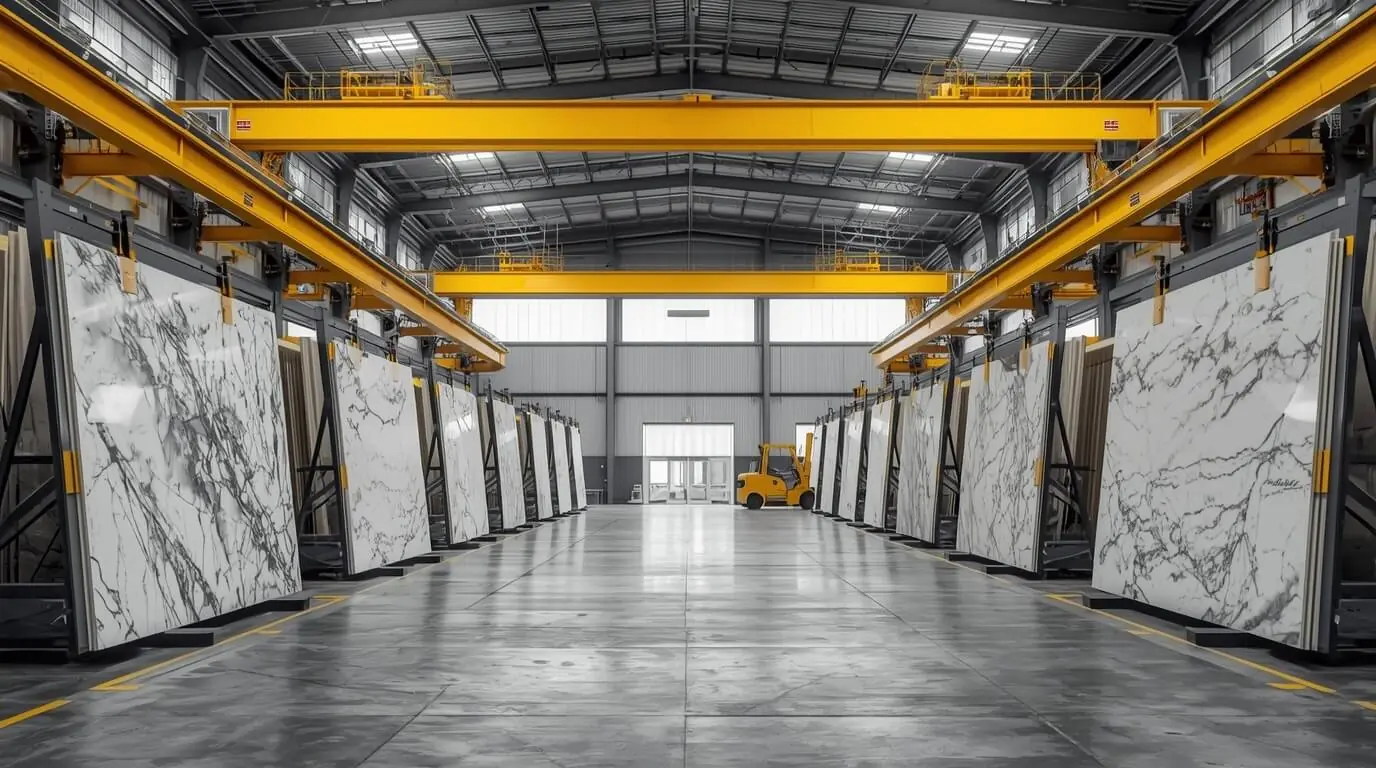
Most slab yards operate in industrial warehouse facilities with reinforced concrete floors capable of supporting heavy loads.
Typical facility sizes include:
Small startup yard
15,000–25,000 square feet
Regional distributor
40,000–100,000+ square feet
Essential infrastructure includes:
- overhead bridge cranes or gantry cranes
- A-frame slab racks for vertical storage
- heavy forklifts for container unloading
- reinforced concrete flooring
- wide aisles for safe slab handling
Because individual slabs can weigh hundreds of pounds, proper lifting systems are essential for safety.
Equipment Required
Operating a marble slab yard requires specialized material-handling equipment.
Common equipment includes:
- overhead crane systems
- slab clamps and lifting attachments
- forklift trucks (often 10,000–20,000 lb capacity)
- stone storage racks or A-frames
- bundle unloading tools
- inspection lighting for slab viewing
If the yard also performs cutting or finishing, additional equipment may include bridge saws and polishing machinery.
Managing Slab Inventory
Natural stone inventory differs from many other construction materials because each slab is visually unique.
For this reason, slab yards often organize inventory based on:
- stone type (marble, quartzite, granite, travertine)
- quarry origin
- color and pattern
- slab finish
Modern slab yards frequently photograph individual slabs and publish them in online inventory systems.
Fabricators and designers can review slabs digitally before visiting the warehouse.
Digital slab inventory is increasingly becoming a standard feature of the industry.
Building Relationships with Fabricators
Most marble slab yards operate primarily in the B2B market.
Their primary customers include:
- countertop fabricators
- stone contractors
- interior designers
- builders and developers
- architects specifying natural stone materials
Fabricators represent the core customer group because they purchase slabs regularly for residential and commercial projects.
Successful slab yards invest significant time in building long-term relationships with fabrication shops.
Staffing a Slab Yard
A small marble slab yard can operate with a relatively small team.
Typical roles include:
- warehouse operators
- forklift or crane operators
- inventory manager
- logistics coordinator
- sales manager
As the business grows, companies may add purchasing managers, marketing staff, and customer service teams.
Safety and Insurance
Handling stone slabs involves substantial physical risk due to the weight and size of materials.
Most slab yards must comply with:
- OSHA workplace safety standards
- equipment certification requirements
- employee training for crane and forklift operation
Insurance coverage commonly includes:
- general liability insurance
- workers’ compensation
- property insurance
- cargo insurance for imported goods
Safety training and proper storage systems are critical for preventing accidents.
Startup Costs
The investment required to start a marble slab yard can vary widely depending on location, inventory scale, and infrastructure.
Major startup costs typically include:
- warehouse lease or purchase
- overhead cranes and lifting equipment
- forklifts
- slab racks
- container shipping costs
- initial stone inventory
Inventory is usually the largest expense, as imported slabs must often be purchased in container quantities.
The Role of Logistics in Stone Supply
One of the most important aspects of operating a slab yard is managing international logistics.
Successful distributors often maintain strong relationships with:
- quarry operators
- stone processing factories
- freight forwarders
- customs brokers
Reliable logistics ensure consistent slab availability, which is critical for serving fabricators working on active construction projects.
Starting a marble slab yard in the United States requires expertise in both natural stone sourcing and industrial logistics.
While the business demands significant infrastructure and capital, it also serves a vital role in the construction and design industries.
Successful slab yards focus on:
- dependable international supply chains
- organized slab inventory systems
- strong relationships with fabricators and contractors
- safe warehouse operations
As construction demand continues to support natural stone use in kitchens, commercial interiors, and architectural projects, slab yards remain an important part of the regional building materials ecosystem.
FAQ - Marble Slab Yard in the U.S.
The cost can vary significantly depending on scale, but most small to mid-sized slab yards require a substantial initial investment. Major expenses include warehouse lease, lifting equipment such as cranes and forklifts, and initial slab inventory.
In many cases, inventory represents the largest portion of startup costs, especially when purchasing full container shipments of marble slabs from overseas suppliers.
A standard 20-foot container typically holds:
- 6 to 8 bundles of slabs
- approximately 6,000 to 8,000 square feet of stone
- total weight around 20 to 25 tons
The exact number depends on slab thickness, stone density, and packing method used by the supplier.
Most marble slabs used in the United States are imported from countries with large quarry industries.
Common sources include Turkey, Italy, Greece, India, and Brazil. These countries supply a wide range of marble types used in residential and commercial projects across the U.S.
Marble slab yards primarily serve B2B customers, including:
- countertop fabricators
- stone contractors
- interior designers
- architects and developers
Fabricators are the most frequent buyers, as they purchase slabs for kitchen countertops, bathrooms, and custom stone applications.
Both approaches are used in the industry.
Buying from distributors allows faster access to inventory without managing logistics. Importing directly from quarries or factories can provide better pricing and more control over selection, but requires experience with international shipping and customs processes.
A marble slab yard requires specialized equipment designed for handling heavy materials, including:
- overhead cranes or gantry systems
- forklifts with high load capacity
- slab racks or A-frames
- lifting clamps and safety equipment
Proper equipment is essential for both efficiency and safety in daily operations.
Unlike standard building materials, natural stone slabs vary in color and pattern.
To manage this, many slab yards organize inventory by bundle and photograph individual slabs. Some also provide digital inventory systems where fabricators can view and reserve slabs online before visiting the warehouse.
Yes, demand for natural stone remains steady due to its use in residential kitchens, commercial interiors, hospitality projects, and architectural applications.
Markets with active construction and remodeling activity, such as Texas, Florida, and California, tend to show particularly strong demand for marble and other natural stone materials.