Natural stone fabricators in Texas rely on several sourcing channels when purchasing marble and quartzite slabs. From local slab yards to direct import supply, this guide explains how the Texas stone market works and where fabricators actually buy their materials.
Major Natural Stone Distribution Cities in Texas
Several major Texas metropolitan areas serve as key distribution hubs for marble and quartzite slabs in the United States.
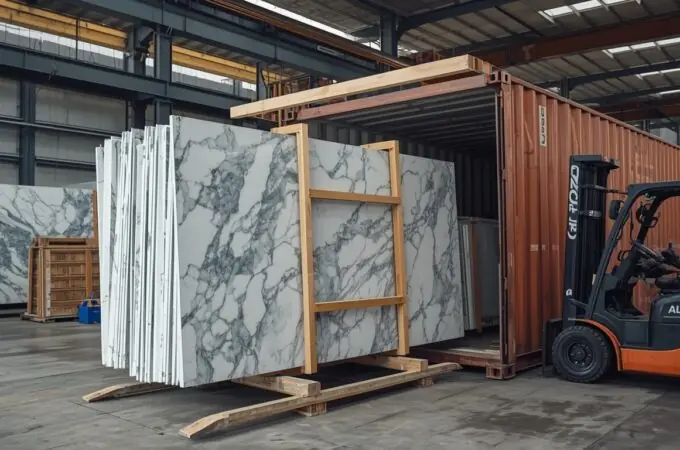
- Houston – one of the main entry points for imported natural stone, with container shipments arriving through Port Houston and distributed across Texas.
- Dallas – Fort Worth
- Austin
- San Antonio
Texas is one of the most important stone markets in the U.S. because it combines rapid population growth, major metro expansion, active residential construction, and strong commercial development. The state’s population reached about 31.7 million in 2025, and Houston was among the U.S. cities with the largest numeric population gains in the latest Census release. At the logistics level, Port Houston also recorded its biggest year ever for container traffic in 2025, handling more than 4.3 million TEUs. For stone buyers, that matters: a fast-growing market with major logistics infrastructure creates the right conditions for slab distribution, project supply, and repeat purchasing.
For that reason, Texas fabricators usually do not rely on a single buying channel. In practice, most buy marble and quartzite slabs through one of three models: local slab yards for immediate access, regional distributors with Texas warehouses for broader inventory, or direct-import/project-based suppliers when they need better pricing, more control, or consistent supply for ongoing work. That buying pattern also reflects how the natural stone industry works globally: the Natural Stone Institute notes that natural stones are quarry-specific materials and are routinely traded internationally because availability depends on source geology and quarry location.
1. Local slab yards and regional distributors
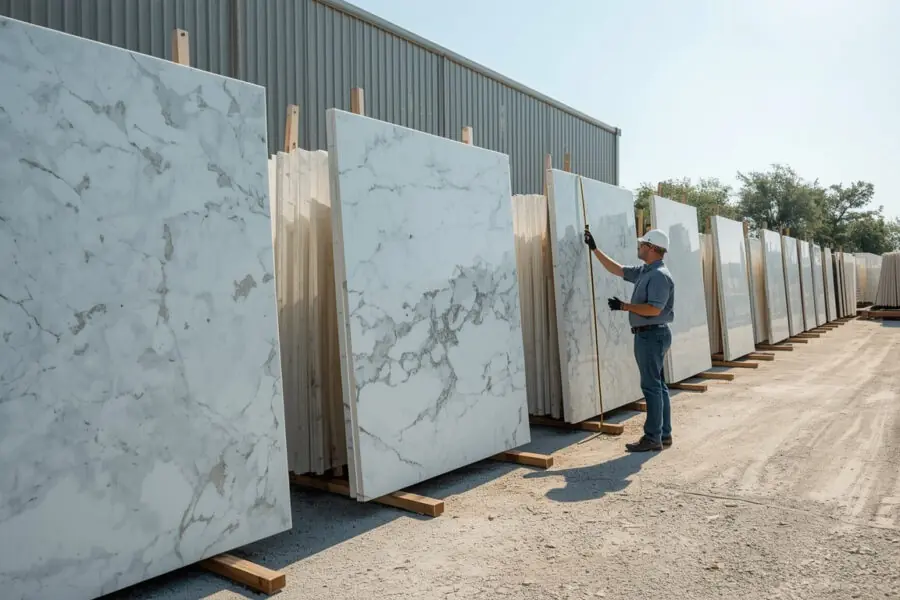
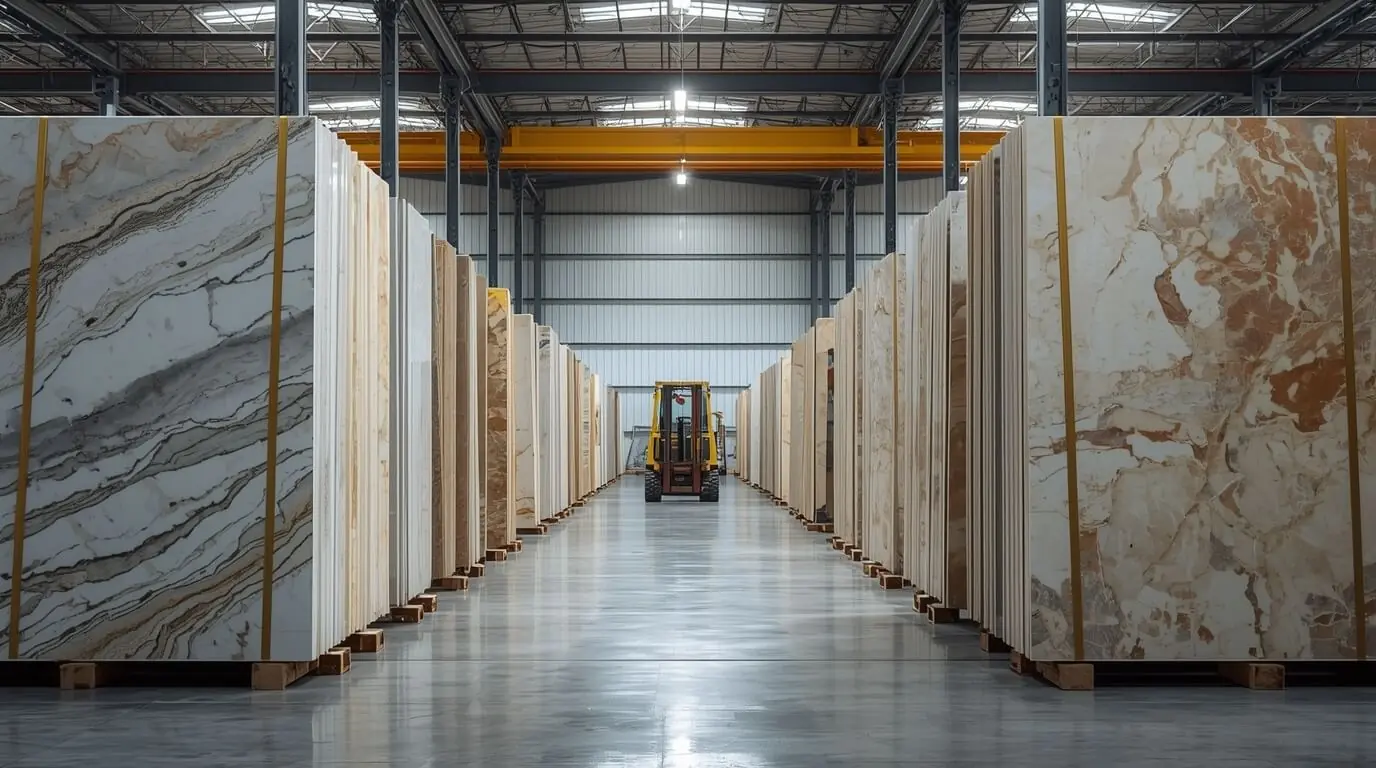
The most common place Texas fabricators buy slabs is still the regional slab yard or distributor. The reason is simple: they can see the exact material, reserve slabs quickly, and move fast on jobs that already have client approval. In Houston, Dallas-Fort Worth, and Austin, fabricators often work with distributors that maintain local stock, display full slabs, and support in-person selection. Examples of companies with a visible Texas slab-distribution presence include MSI in Houston and Dallas, Triton Stone in Houston, Dallas, and Austin, KLZ Stone Supply in DFW, and Austin-based showrooms such as Architectural Tile & Stone and Stratus Surfaces.
This model works especially well for fabricators that need speed more than sourcing flexibility. If a shop is closing jobs week to week, local stock reduces lead time and lets clients approve movement, background tone, and slab character in person. It is also the easiest path for smaller or mid-sized shops that do not want to tie up cash in container-scale purchasing. The tradeoff is that local inventory is usually marked up by every layer between quarry and final fabricator, and selection is limited to what the yard chose to warehouse.
2. Houston and Dallas distribution hubs
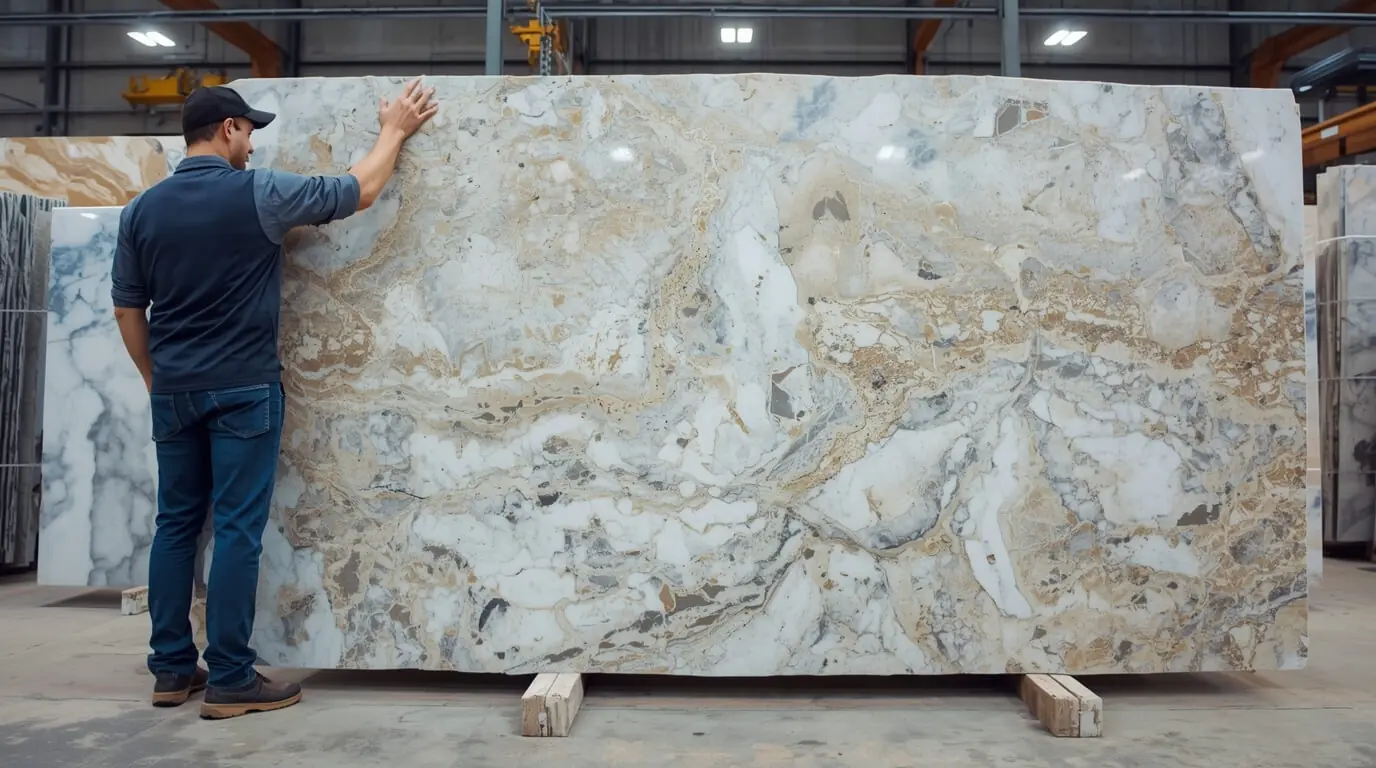
The second major buying channel is through large Texas distribution hubs, especially around Houston and Dallas. This is where many fabricators go when they want more than a neighborhood slab yard can offer but still need domestic availability. Houston is especially important because it combines warehousing access with international freight flow. Port Houston’s record container volumes underline why so much imported material can move efficiently into the Texas market. Dallas-Fort Worth, meanwhile, functions as a major inland distribution center for North Texas and nearby states.
This is also where buying behavior starts to separate by material type. For premium quartzite, many U.S. distributors rely heavily on Brazilian supply, and Brazil’s stone sector has publicly described quartzite as a core export product to the U.S. market. For marble programs, buyers often look toward Mediterranean and European-origin materials, while Turkey remains a major natural stone country with a large export-oriented industry and well-established international fair and trade infrastructure.
In practical terms, Texas fabricators use these hubs when they need a better balance of availability and selection. A local yard may have only a narrow set of white marbles or dramatic quartzites on hand. A larger Texas distribution center is more likely to carry multiple grades, bookmatch-friendly bundles, different finishes, and a wider range of price points. That helps shops win both the fast-moving residential kitchen job and the higher-ticket custom project.
3. Direct-import and project-based sourcing
The third place Texas fabricators buy marble and quartzite slabs is not really a “place” at all – it is a sourcing model. When a fabricator grows beyond opportunistic slab buying, they often move into direct-import relationships or project-based supply programs. That can mean buying by container, by bundle program, or by reserved production with a trusted supplier. This model is especially relevant for shops serving builders, hospitality work, luxury homes, or repeat commercial accounts where consistency matters more than one-off availability.
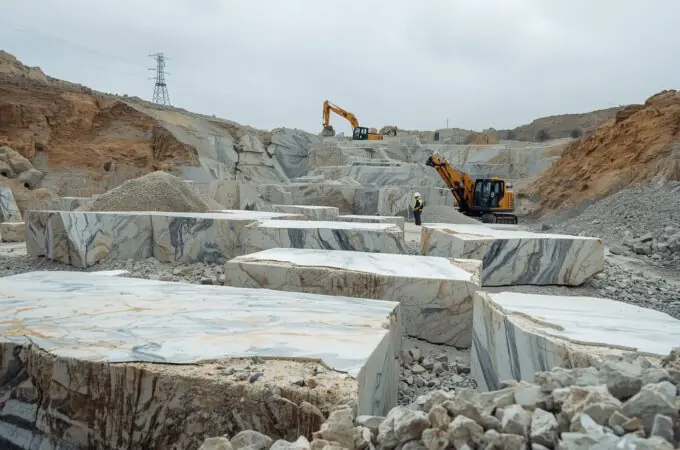
The direct model is attractive because it can improve margin, expand material access, and reduce dependence on whatever happens to be sitting in a Texas warehouse that week. It also gives the buyer more control over origin, finish, bundle selection, and restocking. On the other hand, it only works well when the supplier understands quarry-side production, export packing, container planning, and U.S. logistics. Without that, “direct” can quickly become expensive, delayed, or inconsistent.
Dallas-based Everest Stone openly describes itself as a direct importer and wholesale distributor of natural stone slabs and cut-to-size stone, which shows that direct-import positioning is already part of how the Texas market operates. The difference is that some fabricators buy direct from importers already holding stock in Texas, while others increasingly want project-driven supply relationships closer to the source.
So where do the strongest Texas fabricators actually buy?
The strongest fabricators usually combine all three channels.
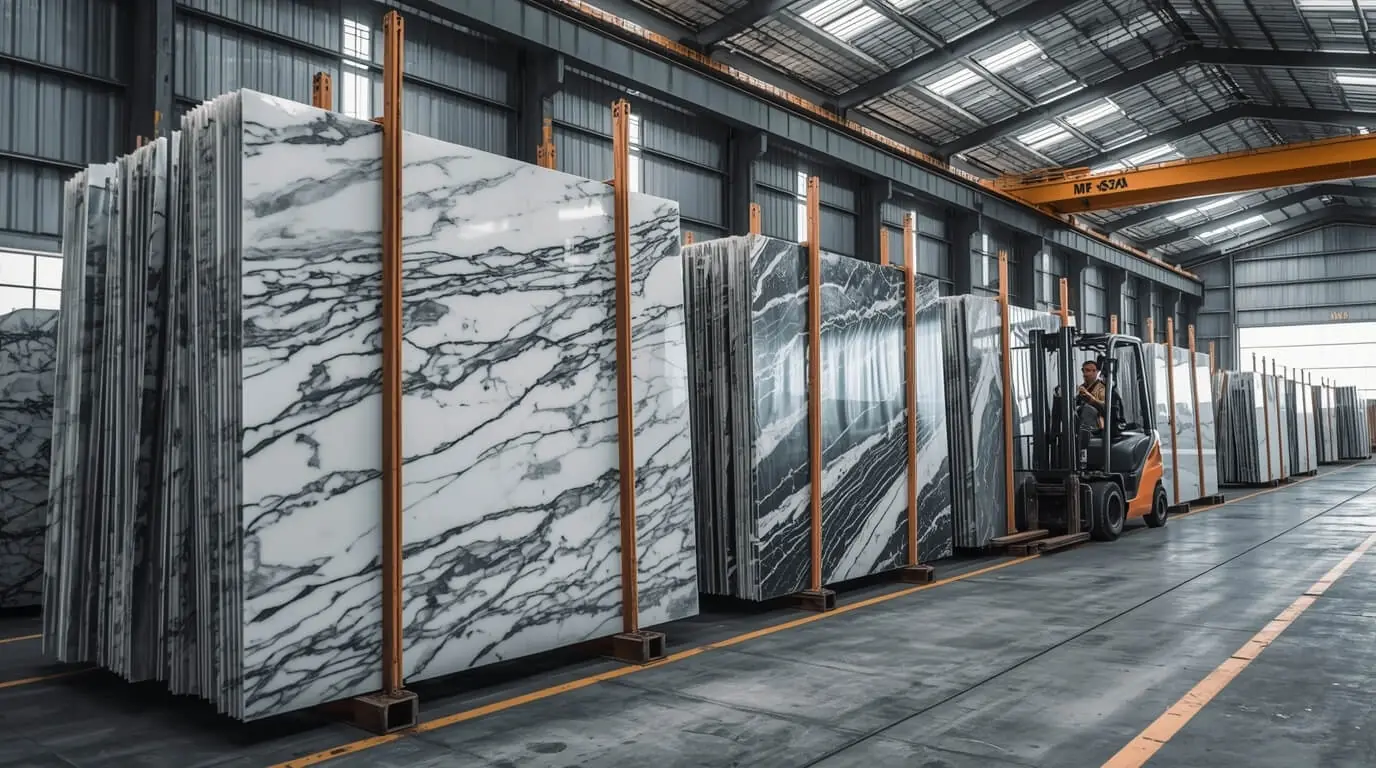
They buy locally when they need speed. They buy from large Texas distributors when they need broader warehouse inventory. And they buy through direct or semi-direct sourcing when they need better pricing, better control, or materials the local market does not consistently stock.
That hybrid strategy is often the smartest one in Texas. The market is large and active enough to reward fast purchasing, but also competitive enough that fabricators cannot rely only on distributor markups forever. Shops that want to grow margin, win better projects, and offer more distinctive materials usually need a sourcing partner beyond the local slab yard.
What Texas buyers should look for in a slab supplier
If the goal is long-term growth rather than random one-off buying, Texas fabricators should evaluate suppliers on more than color selection alone. The key questions are:
- Can the supplier provide consistent material programs, not just occasional slabs?
- Can they support both marble and premium quartzite sourcing, depending on project needs?
- Do they understand export packing, slab protection, bundle planning, and logistics into Texas?
- Can they help with project-based selection, not just warehouse selling?
- Do they have access to real quarry/factory relationships rather than only trading inventory from someone else?
These points matter because stone is not a standardized commodity. Even within the same commercial name, color movement, structure, block source, and finish consistency can vary. The more demanding the project, the more important the sourcing chain becomes.
A better sourcing path for Texas fabricators
For many Texas fabricators, the next step is not replacing local slab yards entirely. It is adding a second sourcing lane.
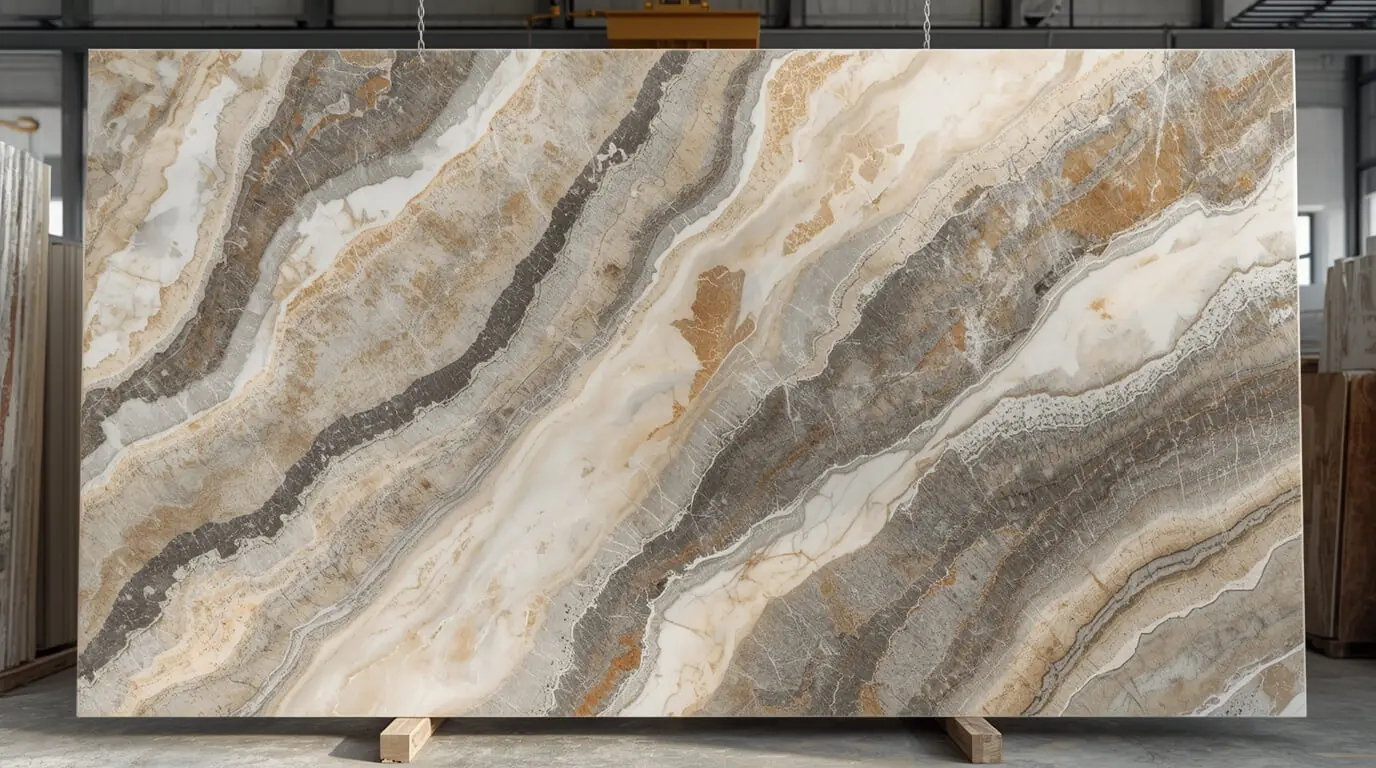
That second lane should help when local inventory is overpriced, too limited, or not aligned with the project. It should be able to support marble programs, selected quartzite opportunities, project-based supply, and direct factory communication when needed. In a market like Texas – where logistics are strong, development is active, and client expectations keep rising – that kind of sourcing flexibility is becoming a competitive advantage, not a luxury.
If your shop is based in Houston, Dallas-Fort Worth, Austin, San Antonio, or anywhere else in Texas and you are looking for a more reliable source for marble or project-driven slab supply, HubWayStone can help you build a smarter sourcing channel – especially for Turkish marble, dolomite, travertine, and selected natural stone programs tailored to U.S. fabricators.
Looking for a Reliable Slab Supply Partner?
Many Texas fabricators rely on local slab yards for quick purchases, but larger projects often require broader sourcing options.
HubWayStone works with verified stone factories and quarries, helping U.S. fabricators source marble, dolomite, travertine, and selected quartzite materials for project-based supply and container programs.
If you’re looking for a more flexible sourcing channel for upcoming projects, we’d be glad to discuss your requirements.
Request material availability or project pricing →
Common Questions About Marble and Quartzite Slabs in Texas
Most fabricators buy marble slabs from regional slab yards and distributors located in major Texas markets such as Houston, Dallas-Fort Worth, and Austin. These facilities maintain inventory that fabricators can inspect and reserve for projects.
Some larger fabricators and distributors work directly with international suppliers. Direct sourcing allows them to control pricing, select materials at the quarry level, and secure consistent supply for larger projects.
Houston plays a major role in the stone trade because it is home to one of the largest ports in the United States. Port Houston receives significant volumes of imported natural stone, making the city a major distribution hub for Texas and surrounding states.
Yes. Quartzite has become increasingly popular in Texas residential and luxury construction due to its durability, natural appearance, and suitability for kitchen countertops and large surfaces.