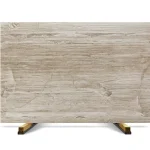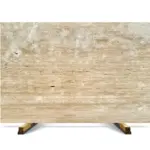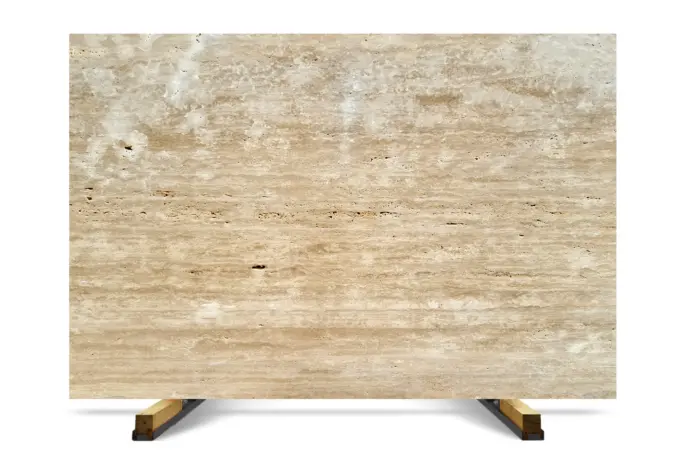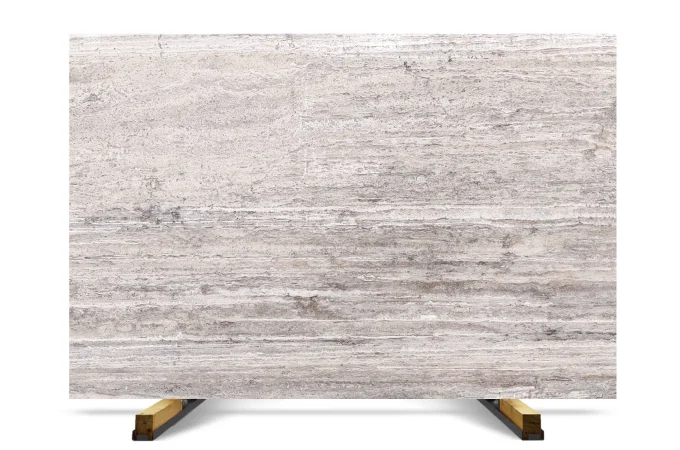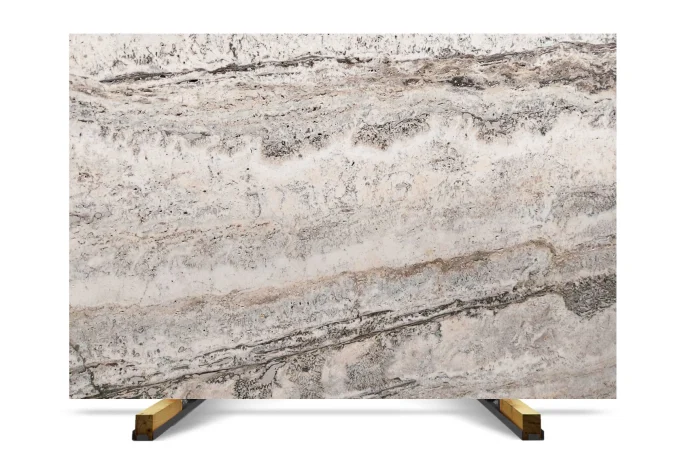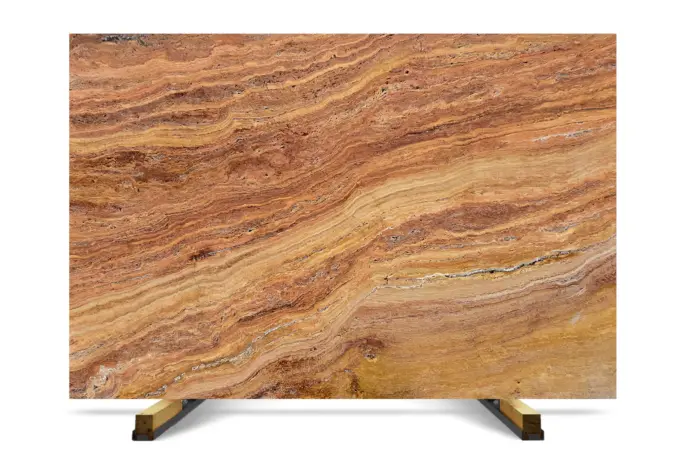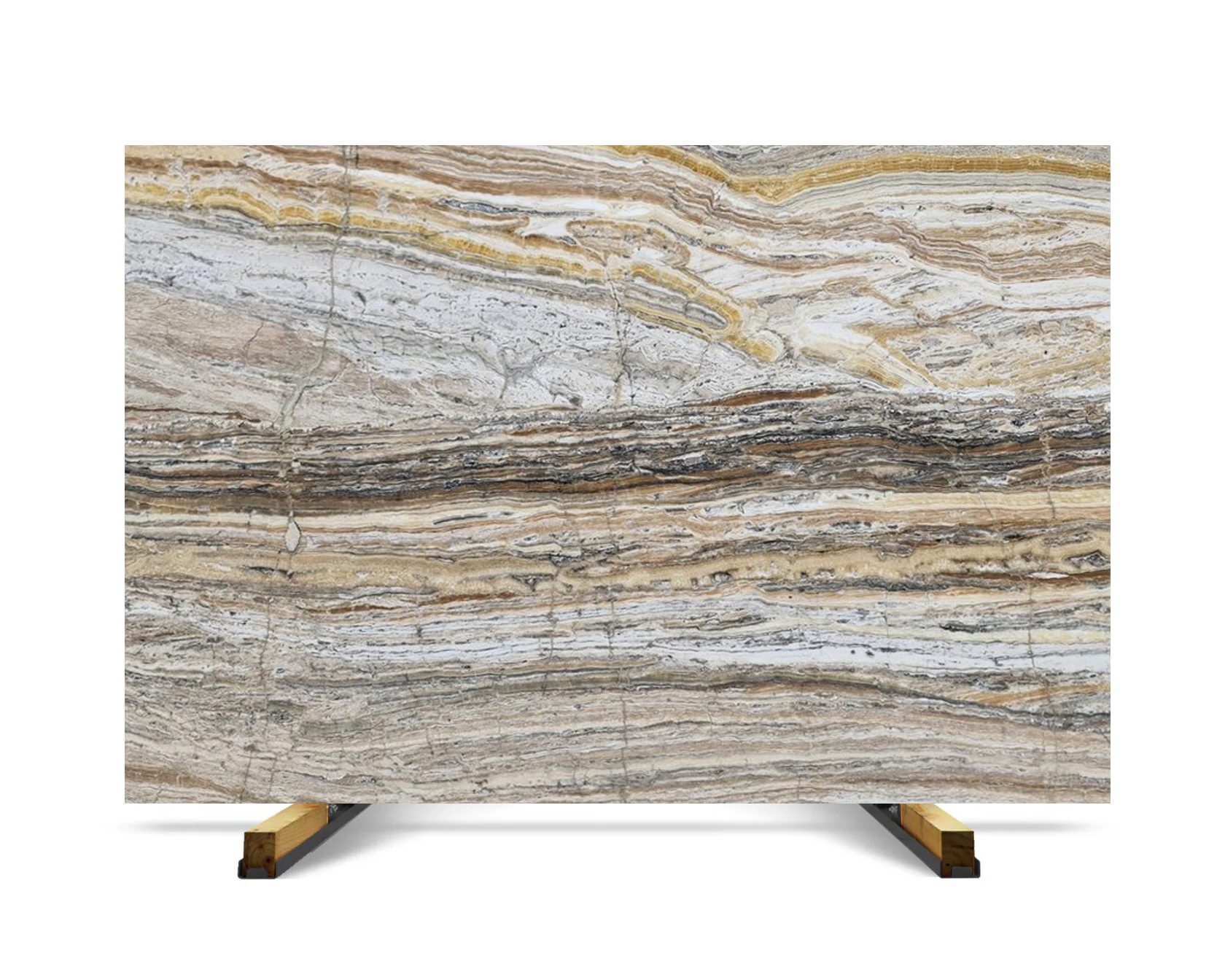
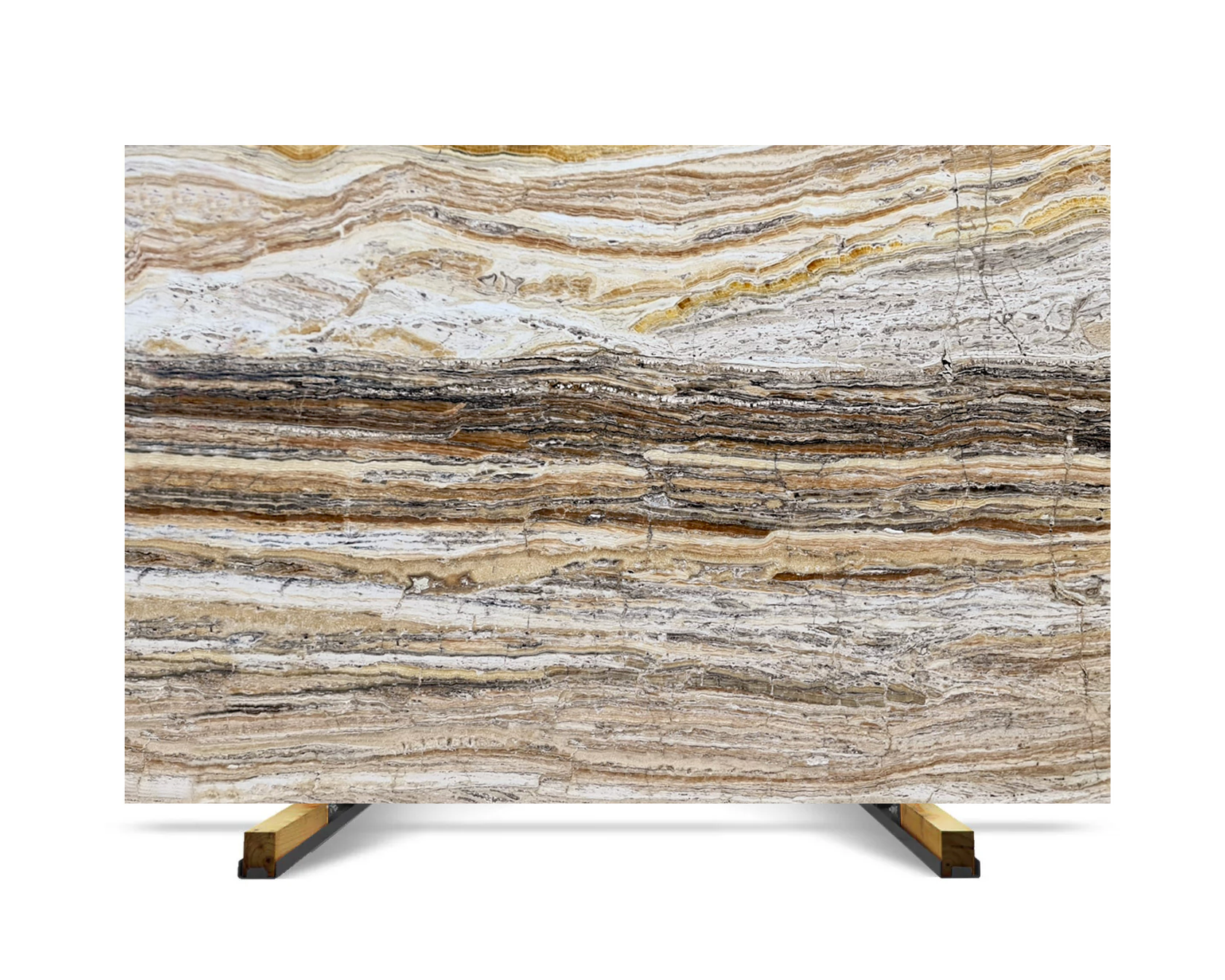
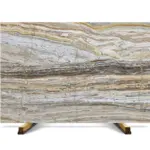
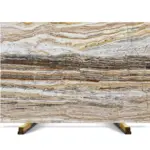
Valencia travertine is supplied from Turkey through a container-based sourcing model, offering a layered natural stone defined by horizontal movement and warm mineral accents.
This material is selected for projects where linear structure is combined with richer tonal variation, creating a more expressive version of classic travertine.
Layered Formation with Strong Visual Rhythm
Valencia travertine features distinct horizontal banding, where beige, cream, grey, and deeper brown tones are compressed into continuous layers.
Unlike more uniform travertines, this material shows a clearer contrast between layers, giving the slab a stronger visual rhythm. Darker mineral lines act as natural separators, enhancing the perception of depth and structure.
The result is a surface that feels geological and structured, but still warm and natural.
Directional Material for Architectural Layouts
This stone performs best when installed with the natural layering running horizontally.
In large applications such as feature walls, long countertops, and vertical panels, Valencia travertine helps visually extend the space, reinforcing horizontal lines and making interiors feel wider and more grounded.
Designers often use this type of travertine intentionally to guide the eye across a surface rather than break it into segments.
More Expressive Than Standard Travertine
Compared to classic light or ivory travertine, Valencia offers a more dynamic surface.
The presence of darker veins and stronger tonal shifts makes it suitable for projects where the stone should be visible and contribute to the overall design — not just act as a neutral background.
It works well in interiors that combine natural materials with modern forms, especially where a balance between calm and character is needed.
Application Flexibility Across Interior Spaces
Valencia travertine is suitable for:
- wall cladding and large-format panels
- bathroom surfaces and vanities
- fireplace surrounds
- commercial interiors with natural material focus
Its layered structure allows it to function both as a primary feature and as a supporting material depending on how it is positioned within the space.
Selection and Fabrication Considerations
Because of its directional pattern, slab selection plays an important role in the final result.
Fabricators typically review slabs to maintain alignment across seams, especially for long runs or bookmatched installations. Proper planning ensures continuity of the natural bands and avoids visual breaks.
Consistent sourcing also helps maintain a balanced mix of tones within a single project.
Specifications
Area of Application
- Flooring
- Window Slopes
- Backlit Panel
- Decorative Partitions / Screens
- Coffee Tables
- Bar Counters
- Cabinets
- Walls
- Countertops
- Decorative Consoles
- Reception Desks