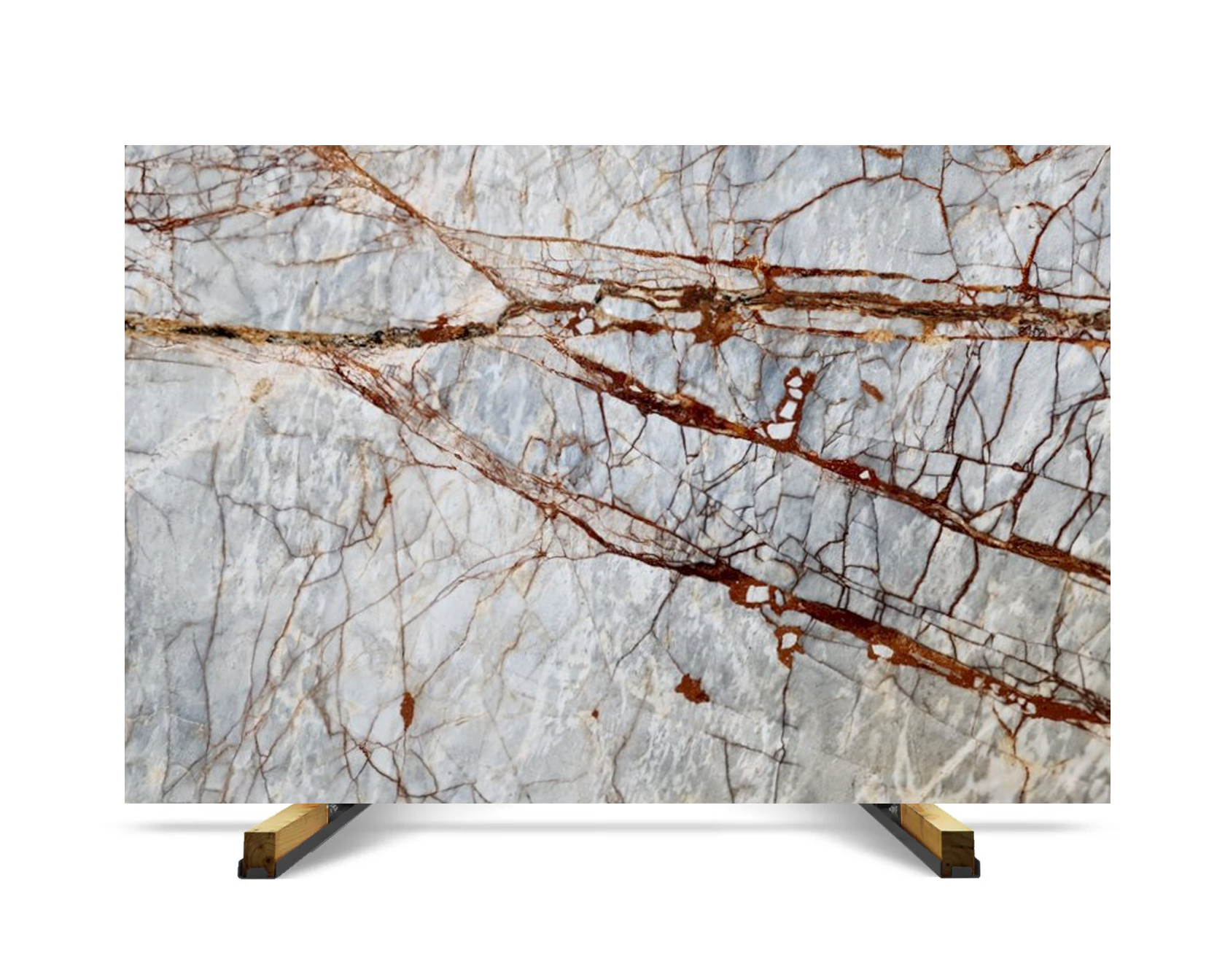
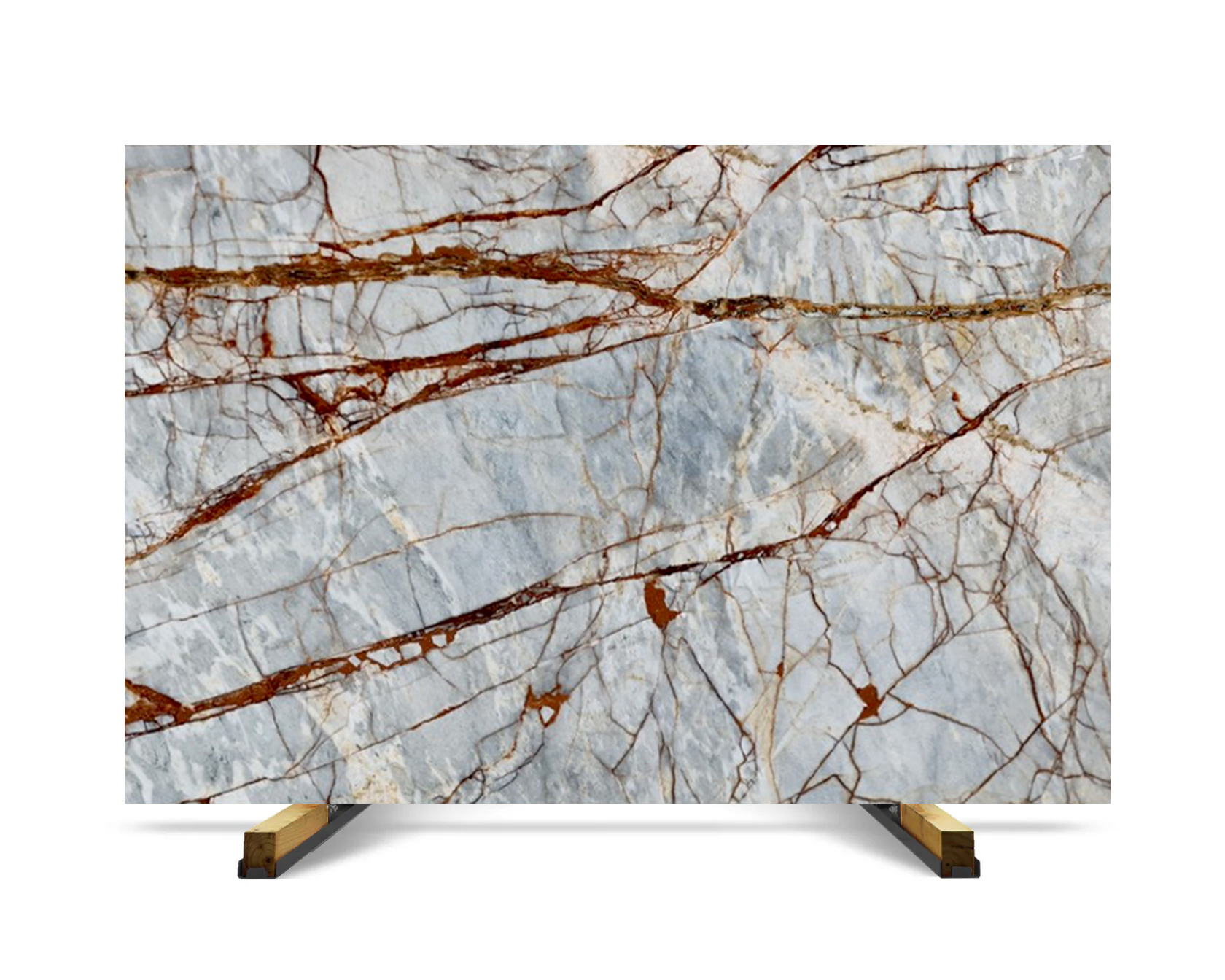
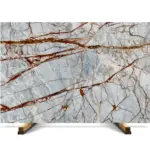
Hierapolis marble from Turkey is supplied to the United States through container-based logistics and project-focused sourcing. This material features a light grey to white background with strong rust-colored veining, creating a high-contrast natural stone surface.
It is commonly selected for interiors where contrast and natural texture are key design elements.
Veining Pattern and Natural Character
Hierapolis marble is defined by its network of mineral veins that cut across the slab in multiple directions. These veins vary in thickness, with deeper rust tones concentrated along larger fractures and finer lines spreading across the surface.
The contrast between the light base and darker mineral deposits creates a visually active surface with strong natural character.
Where It Performs Best
This marble is often used in spaces where materials are intended to stand out rather than blend in.
Typical applications include feature walls, kitchen islands, countertops, and statement panels. It works especially well in modern interiors, loft-style spaces, and projects that combine natural stone with metal, wood, or concrete elements.
Material Handling and Supply
Due to variation in veining intensity, slabs are typically selected individually or arranged in matched sets.
Material is sourced in Turkey and prepared for delivery to the U.S. based on project size or container supply. Selection, finishing, packing, and logistics are managed to ensure consistent results across installations.
Architectural Use and Design Value
Hierapolis marble is valued for its combination of clean background and expressive veining, allowing it to introduce contrast without losing a refined appearance.
It is particularly effective in projects that aim to combine minimal surfaces with natural texture and variation.