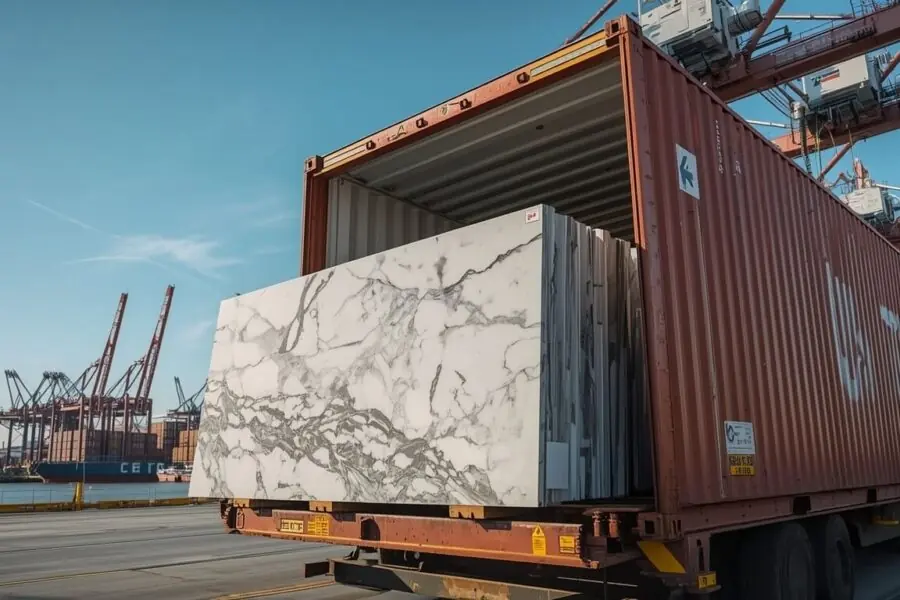
For many U.S. fabricators, importing marble slabs directly from overseas quarries or factories offers better pricing, broader selection and greater control over supply. However, container-based procurement requires careful planning, technical knowledge and a clear understanding of logistics.
This guide outlines how experienced U.S. fabricators structure marble slab imports in full containers – from supplier selection to port arrival and warehouse delivery.
Why Fabricators Import Directly
Working directly with quarry-connected suppliers allows fabricators to:
Looking for reliable stone supply?
We organize direct quarry sourcing from Turkey with container-based delivery across the U.S. Structured for fabricators, contractors and project-based supply.
- Access consistent slab batches
- Secure better per-square-foot pricing
- Control slab thickness and finishing
- Reduce dependency on domestic distributors
- Build long-term sourcing partnerships
Container import is typically considered when annual volume justifies direct procurement rather than spot purchases from local yards.
Choosing the Right Supplier
Before placing a container order, fabricators evaluate:
- Quarry access and production capacity
- Slab quality consistency
- Reinforcement methods and resin systems
- Thickness accuracy
- Export experience
- Inspection transparency
A reliable supplier should provide detailed slab photos, packing layouts and production timelines before shipment.
Container Types and Loading Structure
Most marble slabs are shipped in:
- 20-foot containers (common for heavy stone loads)
- 40-foot containers (for lighter materials or mixed loads)
Typical loading includes:
- Wooden or metal A-frames
- Vertical slab positioning
- Protective spacers
- Moisture barriers
- Secure bracing to prevent shifting
Improper loading is one of the most common causes of transit damage.
Understanding Shipping Terms
U.S. fabricators typically work under:
- FOB (Free On Board)
- CIF (Cost, Insurance and Freight)
- EXW (Ex Works)
FOB is common for experienced importers who manage their own freight forwarders. CIF may be preferred when suppliers handle logistics through destination ports.
Clear understanding of responsibility transfer is critical to avoid unexpected costs.
Lead Times and Production Planning
Average production and delivery timelines may include:
- 2–4 weeks for slab production
- 1–2 weeks for container loading and documentation
- 3–6 weeks ocean transit (depending on port)
Total lead time often ranges between 6–10 weeks.
Fabricators typically plan imports based on project pipelines rather than immediate demand.
U.S. Port and Customs Process
Upon arrival:
- Customs clearance is handled by a broker
- Duties and port fees are assessed
- Container is released for pickup
- Drayage is arranged to warehouse or yard
Partnering with an experienced customs broker reduces delays and demurrage risk.
Quality Control Before Shipment
Professional importers implement:
- Third-party inspections
- Slab selection approval before loading
- Packing verification
- Documentation checks
Investing in inspection is significantly less expensive than resolving damage after arrival.
Minimum Order Quantities and Financial Structure
Full container loads typically require:
- Significant upfront payment
- Production deposit (commonly 30–50%)
- Balance prior to shipment
MOQ depends on slab size, thickness and material density.
Container import makes financial sense when fabricators have predictable project flow.
Risk Management and Long-Term Partnerships
Experienced U.S. fabricators focus on:
- Long-term supplier relationships
- Stable quality control systems
- Transparent communication
- Realistic production planning
Container import is not just a transaction – it is a supply strategy.

Importing marble slabs in containers allows U.S. fabricators to strengthen supply control, improve margins and access premium materials not always available domestically.
When structured properly, container-based sourcing becomes a stable component of long-term fabrication growth.
For fabricators working at scale, direct container import is not simply an option – it is a strategic decision.