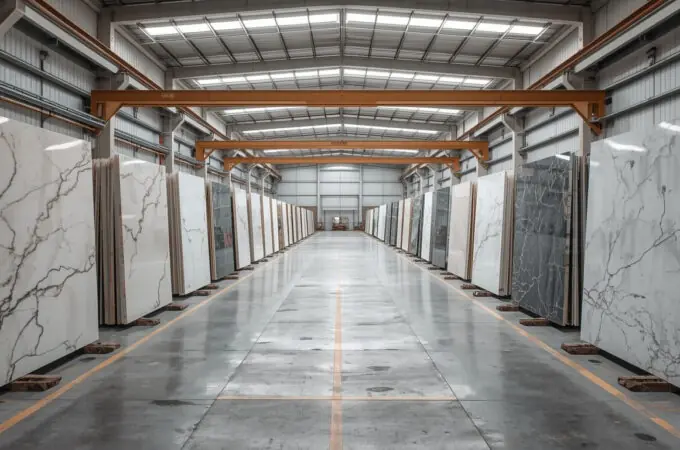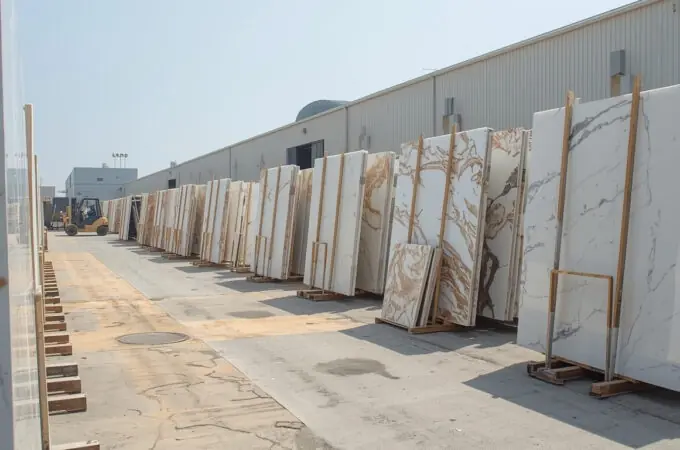
For slab yards in the U.S., sourcing marble is not just about finding the right material. It is about reliability, consistency, pricing, and supply control.
Behind every successful slab yard is a sourcing strategy that connects quarry production with container-based logistics. Understanding this process helps buyers avoid unnecessary intermediaries, reduce costs, and build a more stable inventory pipeline.
This guide breaks down how marble slabs are sourced – from quarry selection to container delivery.
Looking for reliable stone supply?
We organize direct quarry sourcing from Turkey with container-based delivery across the U.S. Structured for fabricators, contractors and project-based supply.
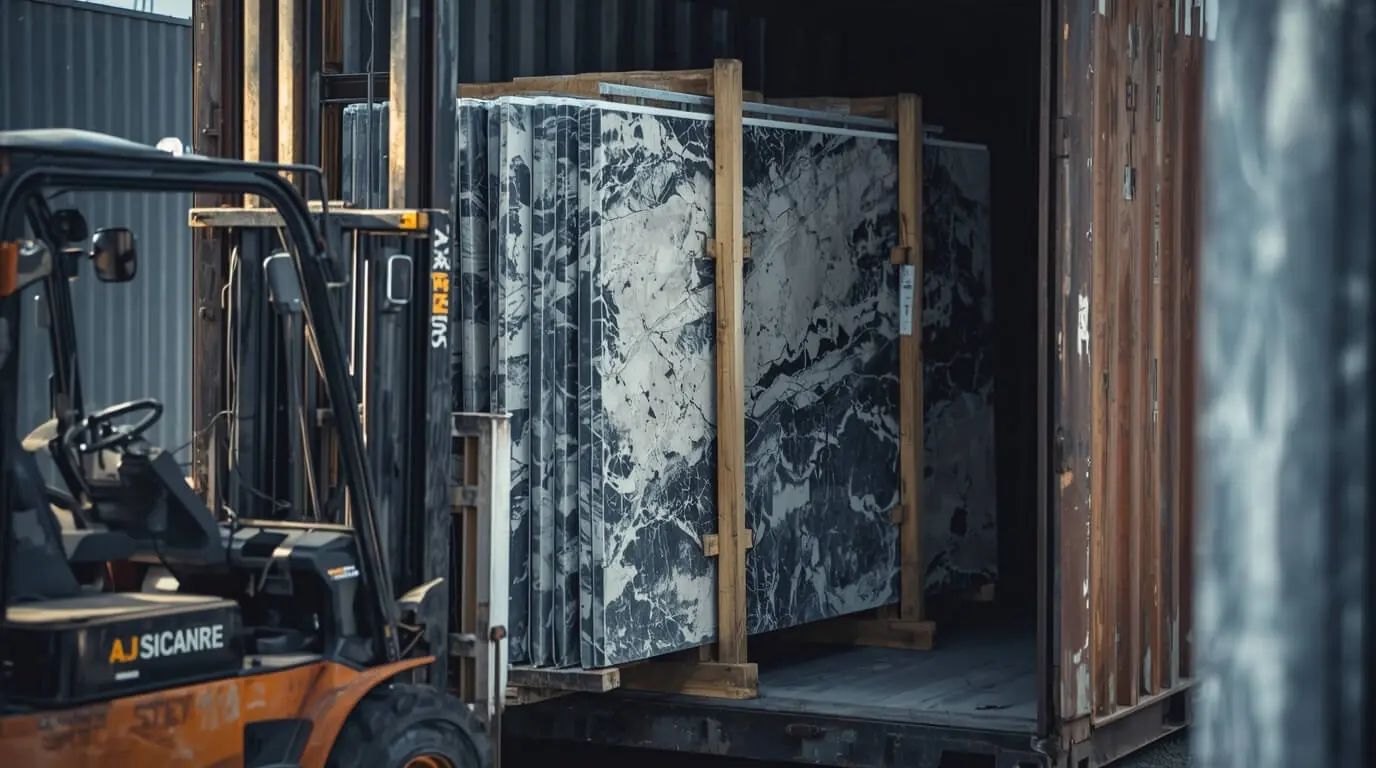
Quarry Selection – Where Supply Really Begins
The sourcing process starts at the quarry level, not at distributors.
Experienced buyers evaluate:
- consistency of color and veining across blocks
- production capacity and extraction stability
- availability of repeatable material
- direct quarry ownership vs third-party intermediaries
Not all quarries can support container-based supply. Many produce limited or inconsistent output, which creates problems later for slab yards.
Direct quarry relationships allow:
- better block selection
- priority production
- stable long-term supply

Block Selection and Processing into Slabs
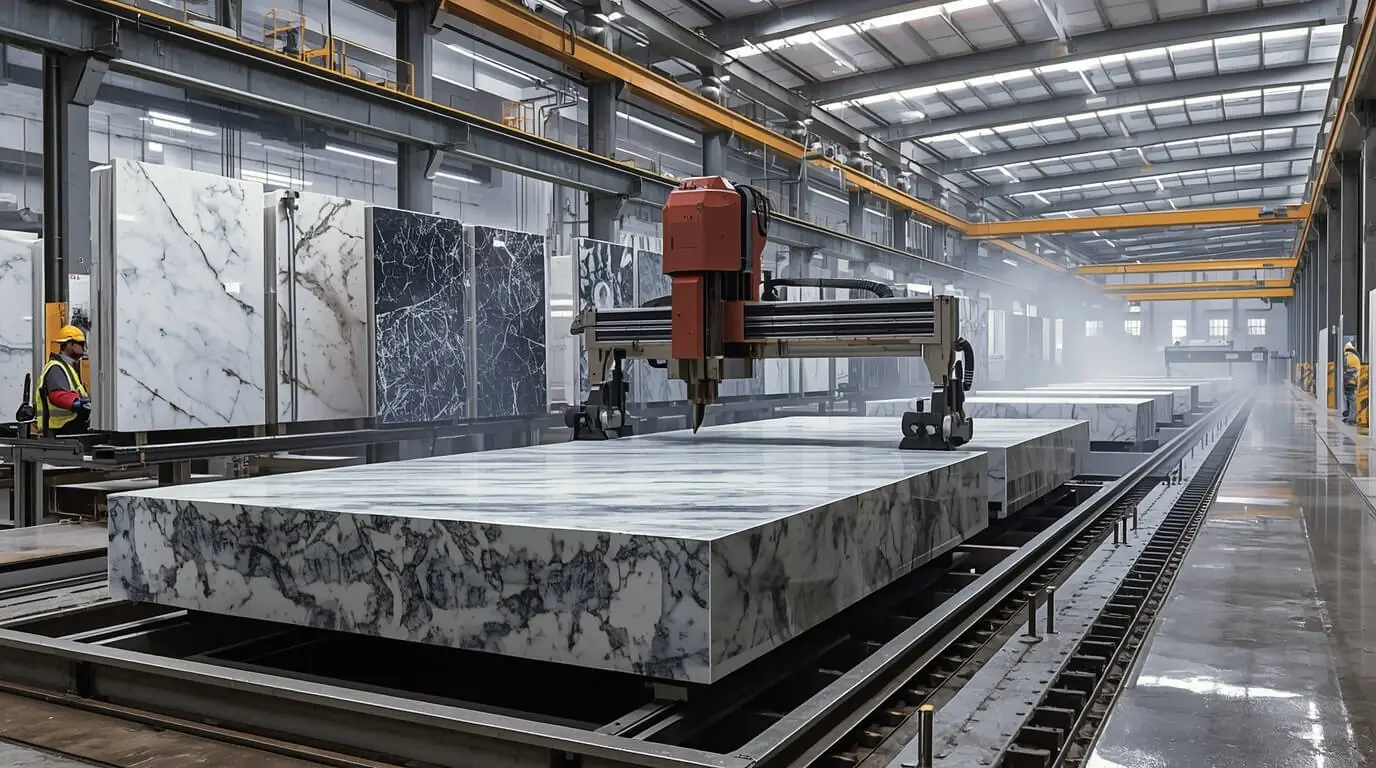
After quarry extraction, marble blocks are transported to processing factories.
At this stage, decisions affect the final commercial value of slabs:
- cutting direction (affects pattern appearance)
- slab thickness (2 cm vs 3 cm)
- resin treatment and reinforcement
- polishing quality
Factories that work with export markets usually follow stricter standards, especially for U.S. slab yards.
Quality Control Before Export
Before slabs are prepared for shipment, they are:
- inspected for cracks and structural integrity
- grouped into bundles (lots)
- labeled and numbered
- matched by color and variation
This stage is critical. Poor QC leads to losses after delivery.
Professional suppliers often provide:
- slab photos or videos before shipment
- bundle-level selection
- documentation for each container
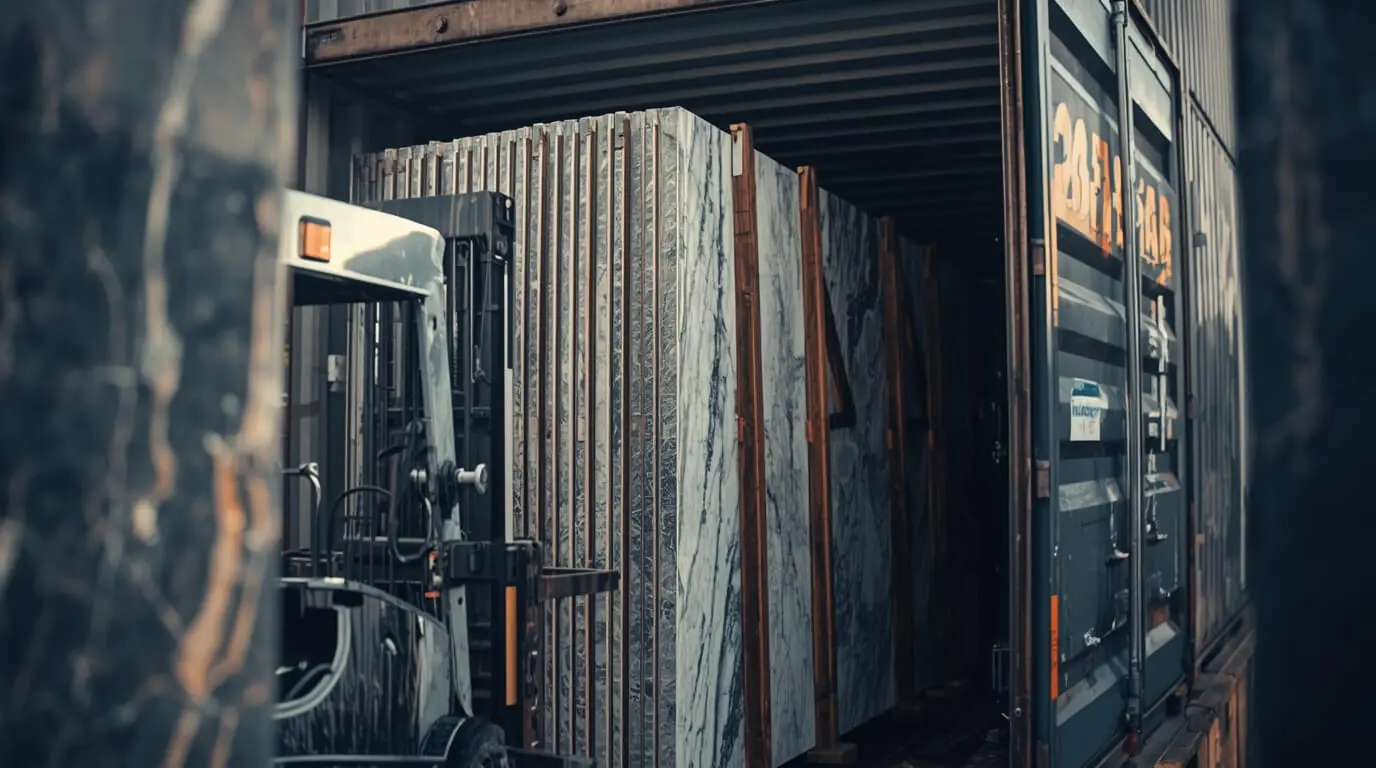
Container Planning and Loading Strategy
Marble slabs are shipped in containers, and how they are loaded directly impacts cost efficiency.
Typical considerations:
- slab thickness and weight
- number of bundles per container
- material mix (single stone vs mixed container)
- packing method (wooden A-frames, supports)
A well-planned container maximizes square footage while maintaining safety.
Direct vs Distributor-Based Sourcing
There are two main sourcing models:
Distributor-Based Supply
- faster availability
- higher pricing
- limited control over selection
Direct Quarry Container Supply
- lower cost per square foot
- better material selection
- longer lead times
- higher minimum order
For slab yards scaling inventory, direct container sourcing is often the more sustainable model.
Delivery and Inventory Integration
Once the container arrives in the U.S.:
- slabs are unloaded and inspected
- bundles are integrated into inventory
- material is categorized for sales
Reliable sourcing ensures that new shipments match previous batches – critical for customer trust.
Why This Process Matters for Slab Yards
Understanding the sourcing chain allows slab yards to:
- reduce dependency on local distributors
- improve margins
- offer more unique materials
- maintain consistent inventory
Sourcing marble slabs is not a single transaction – it is a structured supply chain from quarry to container.
Slab yards that understand and control this process gain a significant advantage in pricing, selection, and long-term growth.