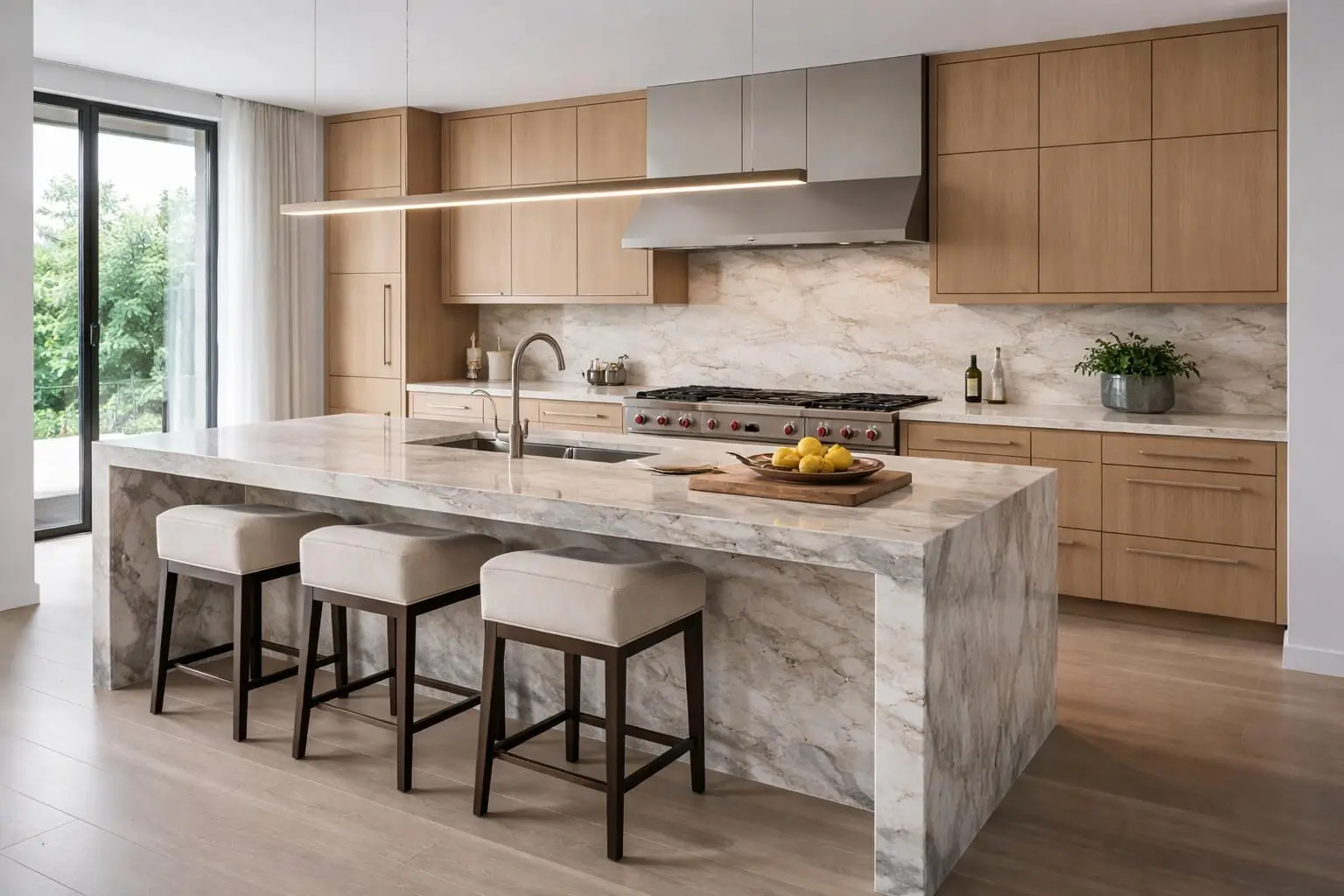
Kitchen Countertops
Performance-based natural stone selection for kitchen countertops and islands - supplied at slab and container scale.
In kitchen environments, natural stone must balance strength, resistance, and maintenance requirements with aesthetic consistency. Material selection is driven not only by appearance, but by how the surface will be used over time.
This page is intended for fabricators, as well as architects, interior designers, builders, and developers evaluating natural stone performance in kitchen environments.
We approach kitchen projects from a performance and supply perspective - aligning material selection with fabrication requirements, project scale, and long-term sourcing strategy.
Kitchen stone must perform under daily use
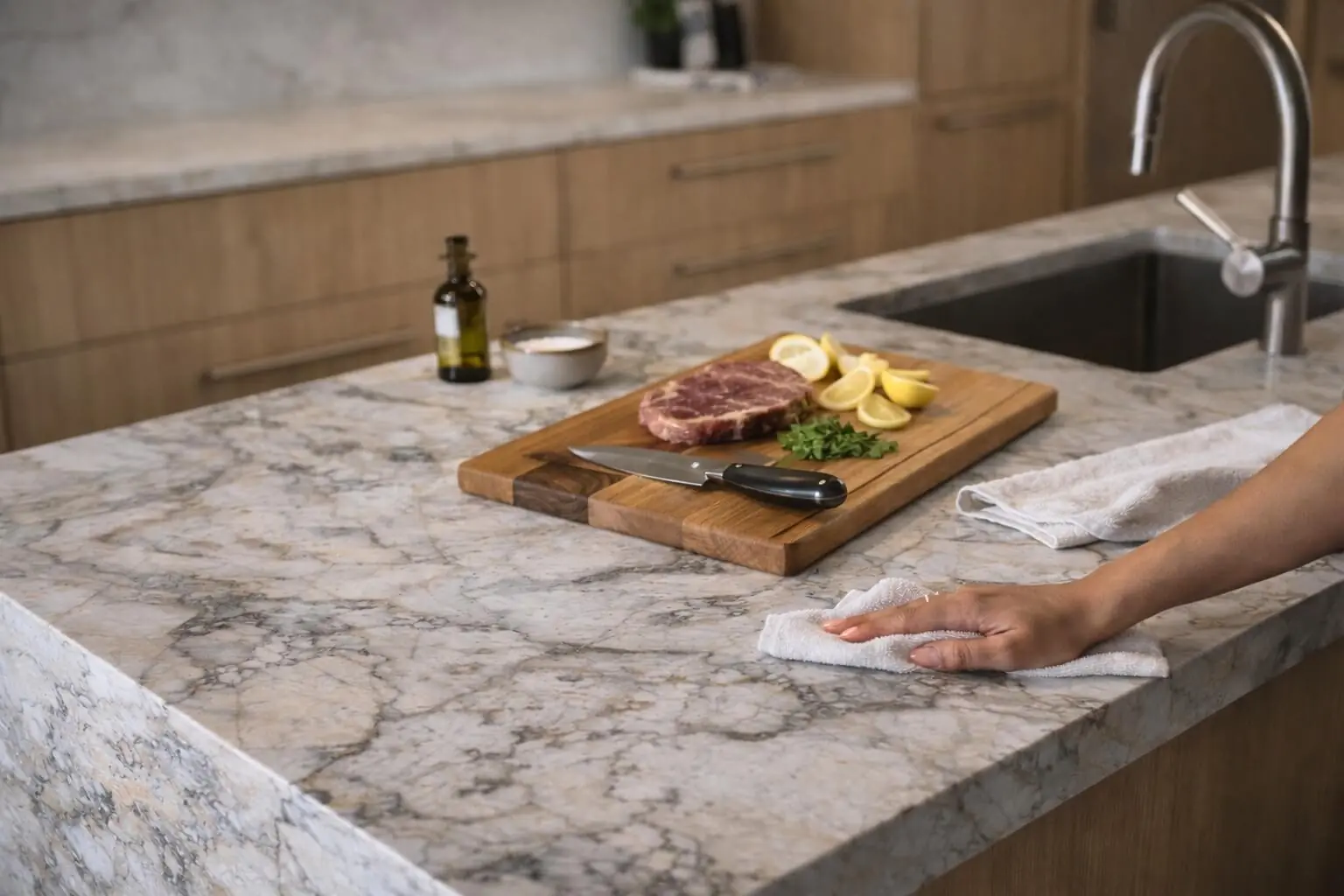
Unlike decorative stone applications, kitchen countertops are functional work surfaces. Cutting, heat exposure, spills, and frequent cleaning directly affect long-term performance.
Our application-first approach focuses on selecting stone types and finishes that align with real kitchen usage. This helps reduce surface damage, staining, and maintenance challenges while maintaining a refined, architectural look.
Our Stone Slab Supply
Marble Slabs Supply
Origin: TurkeyPremium marble slabs sourced from Turkish quarries for residential, commercial, and hospitality projects requiring refined aesthetics and architectural character.
Quartzite Slabs Supply
Origin: BrazilHigh-performance Brazilian quartzite slabs combining natural beauty with durability, suitable for kitchens, islands, and high-traffic interior applications.
Travertine Slabs Supply
Origin: TurkeyNatural travertine slabs selected for architectural facades, outdoor spaces, and interior projects inspired by Mediterranean and contemporary design concepts.
Limestone Slabs Supply
Origin: TurkeyLimestone slabs with calm textures and neutral tones, suitable for architectural interiors, public spaces, and large-scale commercial applications.
Dolomite Slabs Supply
Origin: TurkeySelected dolomite slabs offering a balance between marble aesthetics and improved structural performance for refined interior applications.
Onyx Slabs Supply
Origin: TurkeyDecorative onyx slabs supplied for statement walls, luxury interiors, and feature applications where visual impact is the primary focus.
Planning a kitchen project and selecting stone for countertops or islands?
Share your project scope, usage expectations, and design goals — we will help identify natural stone options suited for kitchen environments, based on performance and long-term durability.
Kitchen Countertops – Performance-Driven Stone Selection
We supply countertop-grade stone in slab and container quantities directly from quarry sources, supporting residential developments, hospitality projects, and large-scale interior build-outs.
Natural stone surfaces for kitchen environments, where durability, daily use, and long-term performance are as critical as visual consistency.
Kitchen countertops represent one of the most technically demanding interior stone applications. Unlike decorative surfaces, kitchen stone is exposed to constant mechanical stress, heat, moisture, food acids, and frequent cleaning. These conditions require materials that perform reliably over time while maintaining a consistent appearance within the overall architectural concept.
Material selection for kitchen countertops is driven not only by color or pattern, but by usage intensity, maintenance expectations, and surface behavior under real operating conditions. Factors such as density, porosity, finish type, and edge detailing directly affect durability, stain resistance, and long-term usability.
Kitchen stone performance under real conditions
Kitchen countertops function as active work surfaces. Cutting, hot cookware, spills, cleaning agents, and repeated contact place continuous demands on the stone. An application-first approach focuses on matching stone type and finish to actual kitchen use rather than purely visual preference. This helps reduce surface damage, maintenance issues, and premature wear while preserving a refined, architectural appearance.
For kitchen islands and countertops, proper material selection ensures both performance stability and design longevity across residential and commercial projects.
Key considerations for kitchen countertop stone
- Resistance to heat, impact, and daily mechanical stress
- Surface porosity and stain behavior in food-preparation environments
- Finish selection affecting slip resistance, maintenance, and wear
- Long-term color and texture stability under frequent cleaning
- Suitability for kitchen islands, work zones, and integrated details
Careful evaluation of these factors allows kitchen stone surfaces to perform consistently over time while supporting both functional requirements and architectural intent.